
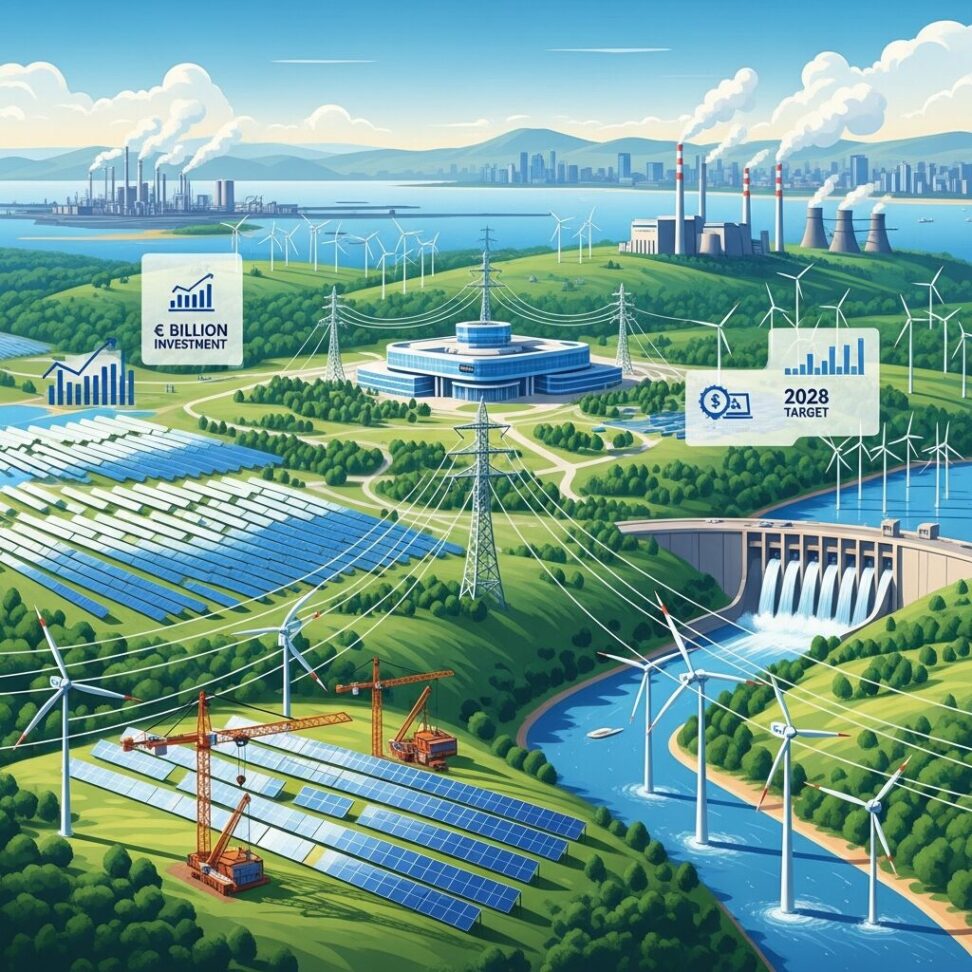
Enel Expands Renewable Energy Capacity 15 GW Investment Plan 2028
Italian energy giant Enel has announced an ambitious expansion of its renewable energy infrastructure, committing to add 15 gigawatts of new clean energy capacity by 2028. This initiative represents a significant acceleration in the company’s transition toward sustainable energy generation and reflects the growing global demand for renewable power sources.
About Enel
Enel is one of Europe’s largest integrated electricity and gas operators, serving millions of customers across multiple continents. Headquartered in Rome, Italy, the company has established itself as a leader in the energy transition, with operations spanning electricity generation, distribution, and retail energy markets. The multinational corporation has been actively shifting its portfolio away from fossil fuels toward renewable energy sources in recent years.
Investment Breakdown and Financial Commitment
The expansion plan involves a substantial financial commitment of €53 billion through 2028. This investment will focus on developing and deploying renewable energy technologies across Enel’s operational footprint. The additional 15 GW of capacity will significantly boost the company’s existing renewable energy portfolio, positioning it as a major contributor to global decarbonization efforts.
The financial allocation demonstrates Enel’s confidence in the profitability and viability of renewable energy projects. This capital deployment strategy aligns with broader market trends showing decreasing costs for wind and solar technologies, making large-scale renewable investments increasingly attractive from both environmental and financial perspectives.
Technology Focus Areas
While specific technology breakdowns may vary by region, Enel’s renewable expansion typically encompasses several key areas:
- Solar photovoltaic installations in high-irradiance regions
- Onshore and offshore wind farm development
- Energy storage solutions to address intermittency challenges
- Grid infrastructure upgrades to support renewable integration
The diversified approach helps mitigate risks associated with any single technology while maximizing the company’s ability to capture renewable energy opportunities across different geographical markets.
Timeline and Implementation Strategy
The 2028 target date provides a clear timeframe for this ambitious expansion. This six-year implementation period allows for proper planning, permitting, construction, and commissioning of numerous renewable energy facilities. The phased approach will likely see steady capacity additions year over year, contributing to progressive reductions in carbon emissions from the company’s generation mix.
Meeting this timeline will require coordination across multiple departments, including project development, engineering, procurement, and regulatory affairs. Enel will need to navigate varying regulatory environments across different countries while managing supply chain considerations for renewable energy equipment.
Market Implications and Competitive Positioning
This capacity expansion positions Enel competitively in the rapidly evolving European and global energy markets. As governments implement stricter emissions regulations and corporate customers seek cleaner energy options, utilities with substantial renewable portfolios gain strategic advantages.
The announcement also signals to investors that Enel views renewable energy as central to its long-term business strategy rather than a peripheral concern. This commitment may influence other major utilities to accelerate their own transition plans to remain competitive.
Environmental Impact
The addition of 15 GW of renewable capacity will displace significant amounts of fossil fuel-based generation. Assuming typical capacity factors for wind and solar installations, this expansion could eliminate millions of tons of CO2 emissions annually once fully operational. The environmental benefits extend beyond carbon reduction to include improved air quality and reduced water consumption compared to conventional thermal power plants.
Challenges and Considerations
Despite the positive outlook, Enel will face several challenges in executing this plan:
- Securing suitable sites with strong renewable resources and acceptable environmental impacts
- Managing supply chain constraints for solar panels, wind turbines, and related equipment
- Obtaining necessary permits and addressing local community concerns
- Ensuring grid stability as renewable penetration increases
- Balancing investment returns with aggressive capacity targets
Successfully navigating these obstacles will be critical to achieving the stated goals within the proposed timeframe and budget.
The investment plan represents one of the largest renewable energy commitments by a European utility and underscores the accelerating pace of the global energy transition. As implementation progresses, industry observers will monitor Enel’s execution as a potential model for other major power companies pursuing decarbonization strategies.
Analyzed and outlined by Claude Sonnet 4.5, images by Gemini Imagen 4.
**Source**
Enel boosts renewables plan with extra 15 GW and €53bn to 2028