
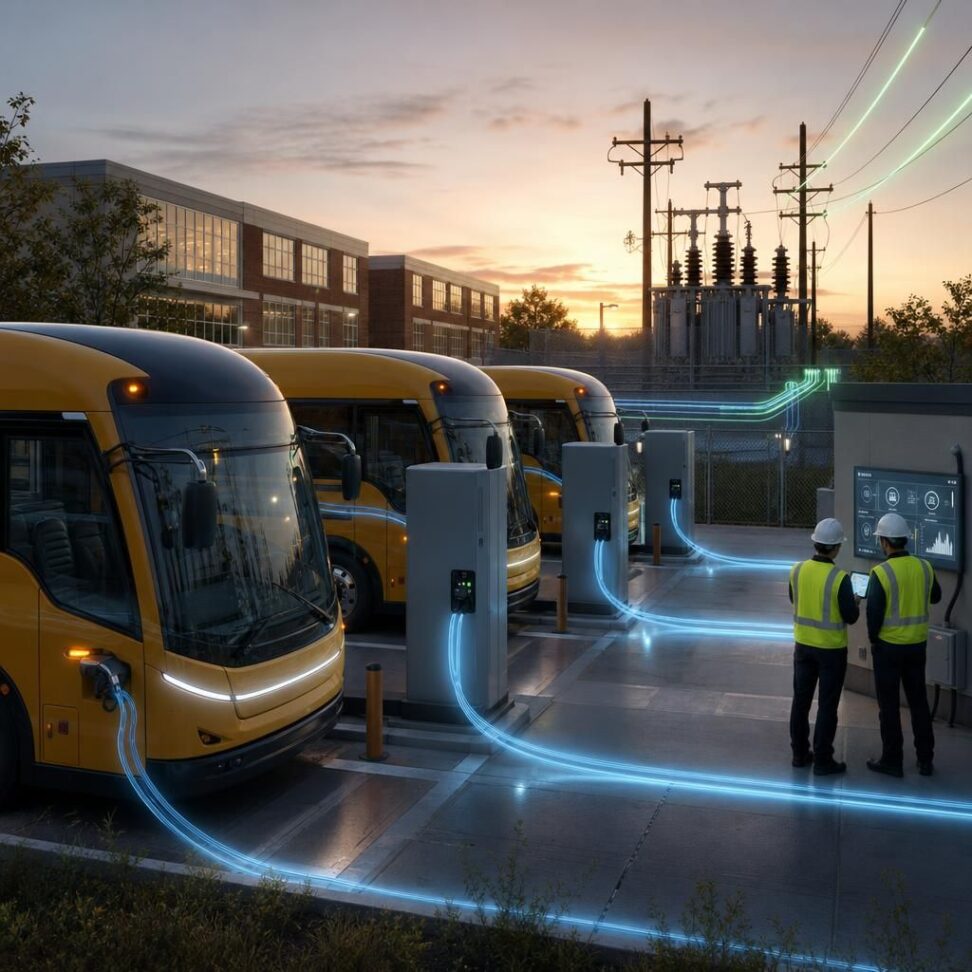
Electric School Buses as Mobile Battery Storage for Grid Stability
Electric school buses are being recognized as more than just a cleaner way to transport students. With their large battery capacities and predictable schedules, they are emerging as a practical resource for supporting electrical grids across North America. Researchers and utility operators are exploring how these vehicles can double as mobile energy storage units, feeding power back into the grid when demand peaks.
How Vehicle-to-Grid Technology Works
Vehicle-to-grid (V2G) technology allows electric vehicles to send stored energy back to the power grid when needed. Electric school buses are particularly well-suited to this role because they typically operate only a few hours each day, transporting students in the morning and afternoon. This leaves long stretches of downtime, including evenings, weekends, and summer months, when their batteries can be tapped for grid support.
A single electric school bus can carry a battery pack ranging from 100 to over 200 kilowatt-hours, which is significantly larger than a passenger EV. When multiple buses are aggregated together, they can function as a sizable virtual power plant capable of stabilizing frequency, shaving peak demand, and providing backup power during outages.
The Economic Case for School Districts
The upfront cost of an electric school bus remains higher than a diesel equivalent, often two to three times more expensive. However, V2G participation can help offset those costs by generating revenue for school districts. Utilities may pay operators for the grid services their buses provide, effectively turning parked vehicles into income-generating assets.
In addition to potential earnings from grid services, districts benefit from:
- Lower fuel costs compared to diesel
- Reduced maintenance expenses due to fewer moving parts
- Cleaner air for students, especially those with respiratory conditions
- Backup power capability during emergencies at schools acting as community shelters
Real-World Pilots and Deployments
Several pilot programs across Canada and the United States are already testing this concept. In Ontario, research is underway to understand how electric school bus fleets could contribute to grid reliability, particularly during summer months when air conditioning drives up electricity demand. Utilities in states such as California, New York, and Virginia have also partnered with school districts on similar V2G trials.
These early deployments are helping engineers determine the optimal balance between charging schedules, battery health, and grid needs. One key concern is battery degradation, as frequent discharging can shorten a battery’s usable lifespan. Modern battery management systems, however, are increasingly capable of minimizing wear while maximizing grid contributions.
Challenges to Widespread Adoption
Despite the promise, several obstacles remain before electric school buses become a widespread grid resource. Bidirectional charging infrastructure is expensive and not yet standardized. Regulatory frameworks in many regions do not clearly define how school districts can participate in energy markets or receive compensation. Coordination between school transportation departments, utilities, and technology providers requires careful planning.
There are also operational considerations. Bus batteries must be full and ready when routes begin, meaning any grid discharge must be carefully scheduled around transportation obligations. Weather conditions, particularly extreme cold, can also affect battery performance and available capacity.