
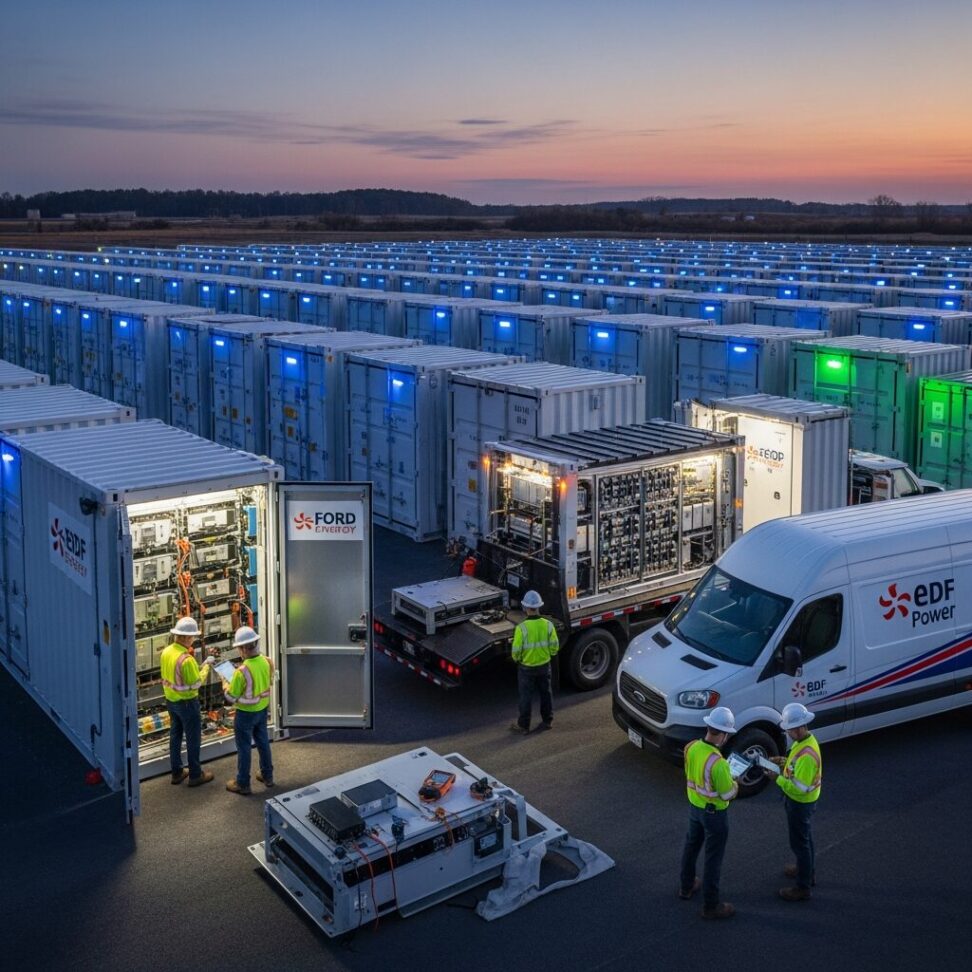
Major Battery Storage Partnership Aims to Strengthen US Energy Infrastructure
A significant development in the energy storage sector has emerged as Ford Energy and EDF Power Solutions have announced a framework agreement to supply 20 gigawatt-hours (GWh) of battery energy storage systems (BESS) in the United States. This partnership represents one of the largest commitments to battery storage deployment in recent years.
The Partnership Details
The collaboration between these two energy sector players focuses on delivering large-scale battery storage solutions across the United States. The 20 GWh capacity represents a substantial investment in grid-scale energy storage infrastructure, which plays a critical role in stabilizing power grids and integrating renewable energy sources.
Ford Energy, a company specializing in energy storage solutions and grid infrastructure, brings expertise in battery system deployment and project development. The company has been active in advancing energy storage technology and implementation across various markets.
EDF Power Solutions operates as part of the broader EDF Group, one of the world’s largest electricity producers and energy service providers. The company focuses on developing integrated energy solutions, including renewable energy projects and storage systems. EDF Power Solutions has been expanding its presence in the North American energy storage market as demand for grid flexibility continues to grow.
Understanding the Scale
To put the 20 GWh figure into perspective, this amount of energy storage capacity could power hundreds of thousands of homes during peak demand periods. Battery energy storage systems serve multiple functions in modern power grids:
- Storing excess energy generated during periods of low demand
- Releasing stored power during peak consumption hours
- Providing grid stability services
- Enabling greater integration of intermittent renewable energy sources like solar and wind
- Reducing reliance on fossil fuel peaker plants
Market Context and Timing
This agreement comes at a time when the United States is experiencing rapid growth in energy storage deployment. Federal incentives, including those from the Inflation Reduction Act, have created favorable conditions for battery storage investments. Grid operators increasingly recognize the value of storage in maintaining reliability while transitioning to cleaner energy sources.
The timing of this partnership aligns with broader industry trends showing accelerated adoption of battery storage technology. Costs for lithium-ion batteries have decreased substantially over the past decade, making large-scale storage projects more economically viable than ever before.
Technical and Operational Implications
Battery energy storage systems at this scale require careful planning and coordination with grid operators. The projects developed under this framework agreement will need to address several technical considerations:
- Site selection and permitting requirements
- Grid interconnection logistics
- Battery chemistry selection and performance specifications
- Safety systems and operational protocols
- Maintenance and lifecycle management strategies
Industry Impact
The Ford Energy and EDF Power Solutions partnership signals growing confidence in the battery storage market. Framework agreements of this magnitude typically span multiple years and involve numerous individual projects. This approach allows for streamlined procurement processes and potential cost efficiencies through volume commitments.
For the broader energy sector, such large commitments help establish supply chain stability and encourage continued innovation in battery technology. Manufacturers gain visibility into future demand, enabling them to plan production capacity accordingly.
Looking Ahead
As the United States works toward its clean energy goals, partnerships like this one between Ford Energy and EDF Power Solutions will likely become more common. Energy storage is widely regarded as essential infrastructure for a modernized electric grid capable of handling higher percentages of renewable generation.
The successful execution of this 20 GWh framework agreement could set precedents for future large-scale storage deployments. It will provide valuable data on project implementation timelines, cost structures, and operational performance that can inform subsequent investments in the sector.
The energy storage market continues to evolve rapidly, with new technologies and business models emerging regularly. This partnership demonstrates how established energy companies are positioning themselves to meet growing demand for flexible, reliable grid resources in an increasingly complex energy landscape.
Analyzed and outlined by Claude Sonnet 4.5, images by Imagen 4.0 Ultra.
**Source**
https://www.energetica-india.net/news/ford-energy-edf-power-solutions-sign-20-gwh-bess-supply-framework-agreement-in-us