
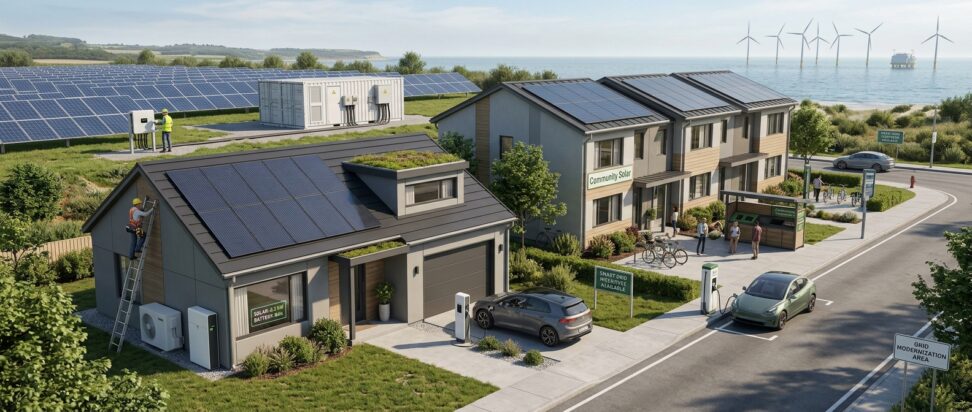
Green Energy Development and Sustainable Lifestyle Trends 2026
As we move deeper into 2026, the renewable energy sector continues to reshape how households and businesses approach power generation, consumption, and everyday living. From solar adoption to circular economy practices, sustainability is no longer a niche interest but a mainstream expectation among consumers and policymakers alike.
Solar and Wind Capacity Continue to Expand
Solar photovoltaic installations and wind energy projects remain the backbone of new renewable capacity being added to grids worldwide. Utility-scale solar farms and distributed rooftop systems are being deployed at a pace that reflects falling equipment costs and improved financing options for homeowners and commercial property owners.
Offshore wind, in particular, is drawing attention as a growth area, with several coastal regions advancing permitting processes for new turbine arrays. These projects are often paired with battery storage systems designed to smooth out the intermittency that has historically challenged renewable-heavy grids.
Battery Storage Becomes a Household Consideration
Home battery storage systems are increasingly marketed alongside solar panel installations, allowing consumers to store excess energy generated during the day for use during evening peak hours. This shift is helping households reduce reliance on grid electricity and, in some cases, participate in demand-response programs that pay consumers for reducing usage during high-demand periods.
- Lower upfront costs for lithium-ion and emerging sodium-ion battery technologies
- Integration with smart home systems for automated energy management
- Growing availability of financing and leasing options for storage systems
Electric Vehicles and Charging Infrastructure
Electric vehicle adoption continues to climb, supported by an expanding network of public charging stations along highways and in urban centers. Automakers are introducing longer-range models at more accessible price points, while utilities are working to upgrade grid infrastructure to handle increased charging demand.
Workplace and multi-unit residential charging remain areas of active development, as many drivers without access to home garages seek reliable charging options closer to where they live and work.
Sustainable Lifestyle Choices Gain Traction
Beyond energy generation, consumers are increasingly factoring sustainability into daily choices, from food sourcing to home construction materials. Interest in energy-efficient appliances, sustainable building certifications, and reduced-waste living has grown steadily among younger homeowners and renters.
- Increased demand for heat pumps as alternatives to traditional furnaces and air conditioners
- Growing market for secondhand and refurbished electronics and furniture
- Rising interest in community solar programs for renters and apartment dwellers
- Expansion of local composting and food waste reduction initiatives
Corporate Sustainability Commitments
Businesses across sectors are setting emissions reduction targets and reporting on progress toward sustainability goals. Many companies are turning to power purchase agreements with renewable energy developers to secure long-term clean energy supply while supporting new project development.
Supply chain sustainability has also become a focal point, with companies scrutinizing the environmental footprint of materials sourcing, manufacturing processes, and transportation logistics tied to their products and services.
Policy and Regulatory Developments
Government incentives continue to play a role in shaping the pace of renewable energy adoption. Tax credits, rebate programs, and grid modernization funding are being used by various jurisdictions to encourage both utility-scale projects and residential upgrades.
Regulatory frameworks are also evolving to address grid interconnection standards, making it easier for distributed energy resources like rooftop solar and home batteries to feed power back into local grids.
Challenges Ahead
Despite the momentum, the renewable energy transition faces ongoing challenges. Supply chain constraints for critical minerals used in batteries and solar panels remain a concern, as does the need for skilled labor to install and maintain growing renewable infrastructure. Grid capacity upgrades, particularly in older transmission networks, require significant investment and coordination between utilities and regulators.
Public acceptance of new infrastructure, including transmission lines and large-scale renewable installations, also continues to shape project timelines in many regions.
Looking Forward
As 2026 progresses, the intersection of technological innovation, consumer demand, and policy support suggests continued growth for renewable energy and sustainable living practices. Households and businesses alike are finding practical ways to reduce their environmental footprint while managing energy costs, signaling a shift toward more integrated approaches to sustainability across residential, commercial, and industrial sectors.
Analyzed and outlined by Claude Sonnet 5, images by Gemini 3.1 Flash
**Source** https://www.canadiangeographic.ca/content/cnw-newswire?rkey=20260825C1383&filter=11169