
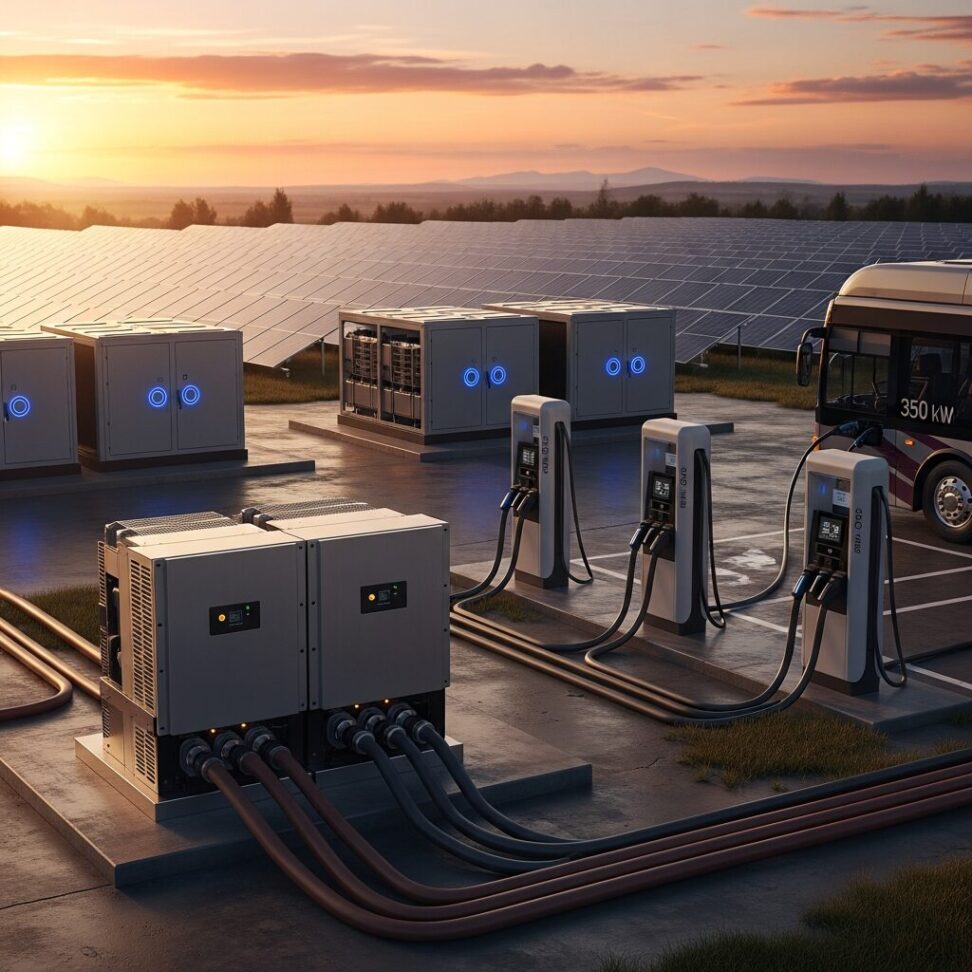
Inverter Market Growth: Doubling by 2030 Driven by Solar and Storage
The global inverter market is on track to more than double by 2030, fueled by accelerating deployment of solar power, energy storage systems, and electric vehicle infrastructure. A new industry report highlights the central role inverters will play in the ongoing transition to clean energy and the electrification of transportation worldwide.
Market Outlook: Strong Growth Through 2030
According to the latest market analysis, the inverter sector is positioned for a sharp expansion over the next five years. The doubling of market value reflects rising demand across multiple sectors, with renewable energy and EV charging infrastructure standing out as the primary growth engines. As countries push toward decarbonization targets, inverters have become a foundational technology connecting clean generation, storage, and end-use applications.
Solar and Energy Storage Lead the Charge
Solar photovoltaic installations remain the largest single driver of inverter demand. Utility-scale solar farms, commercial rooftop systems, and residential installations all depend on inverters to convert direct current (DC) electricity into grid-compatible alternating current (AC).
The rapid adoption of battery energy storage systems (BESS) is adding another layer of demand. Hybrid and bidirectional inverters, which can manage both solar generation and battery charging or discharging, are seeing particularly strong uptake. This trend is supported by:
- Growing residential interest in self-consumption and backup power
- Utility deployments pairing solar with storage to provide grid services
- Commercial and industrial users seeking demand management and resilience
- Government incentives in the U.S., Europe, and Asia targeting storage adoption
EV Infrastructure Expands Inverter Demand
Electric vehicle charging infrastructure is creating a new and rapidly expanding application for advanced inverter technology. DC fast chargers, vehicle-to-grid (V2G) systems, and integrated solar-plus-storage charging stations all rely on power conversion equipment. As global EV sales continue to climb and governments invest in charging networks, this segment is expected to contribute a growing share of inverter market revenue through the end of the decade.
Regional Dynamics
Asia-Pacific is forecast to remain the largest regional market, led by China’s dominant manufacturing base and aggressive solar deployment targets. India, Japan, and South Korea are also expected to contribute significant demand.
North America is projected to see strong growth supported by the Inflation Reduction Act and state-level clean energy mandates, while Europe continues to invest in solar, storage, and grid modernization in response to energy security concerns and climate policy.
Technology Trends Shaping the Market
Beyond unit volume growth, the inverter market is being reshaped by several technology trends:
- Smart and grid-forming inverters: Advanced controls allow inverters to stabilize grids with high renewable penetration
- String and microinverter adoption: Distributed architectures are gaining popularity in residential and commercial solar
- Silicon carbide (SiC) and gallium nitride (GaN) semiconductors: Wide-b