
Northern Canada’s Energy Crisis: Renewable Solutions for Remote Communities
Northern Canada faces a unique challenge that sets it apart from the rest of the country: providing reliable electricity to small, isolated communities scattered across vast territories. With limited population density and extreme environmental conditions, these regions struggle with infrastructure demands that dwarf their economic capacity.
The Infrastructure Challenge
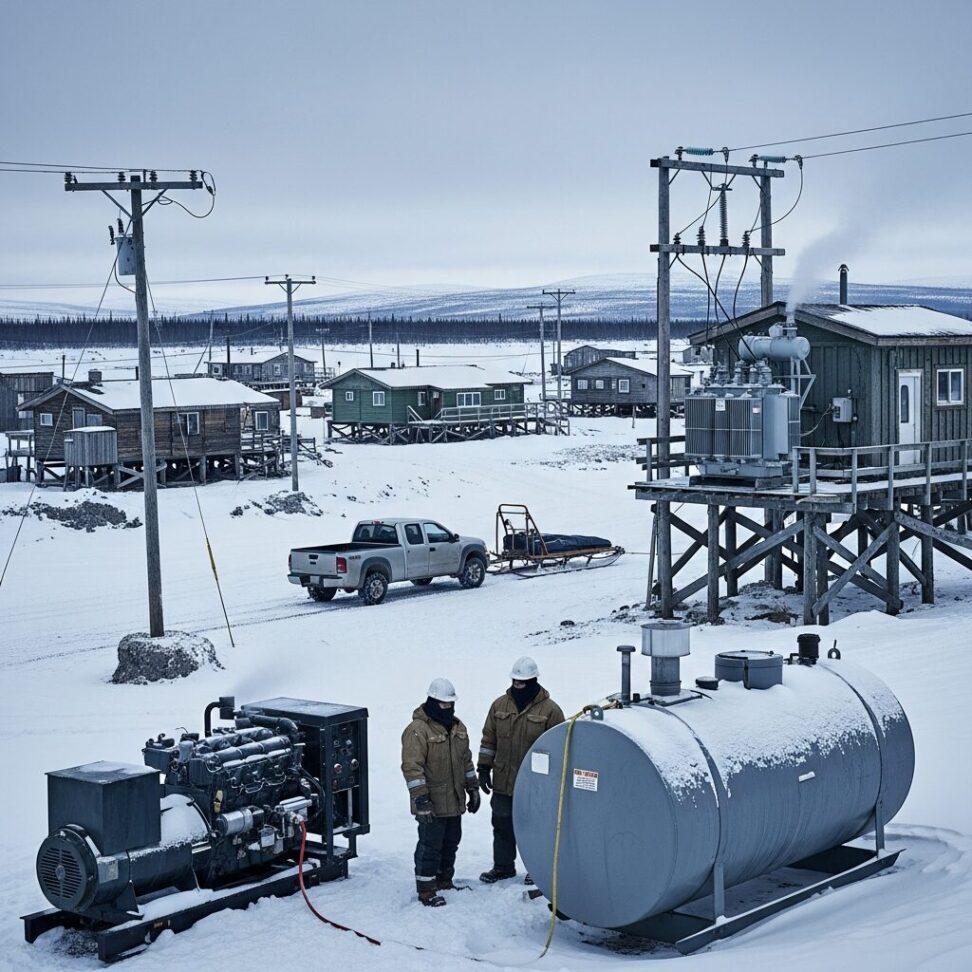
The territory of Nunavut exemplifies this crisis. Covering roughly one-fifth of Canada’s landmass but home to fewer than 40,000 residents, the region lacks a connected electrical grid. Each of its 25 communities operates independently, relying almost exclusively on diesel generators for power generation. This approach creates both environmental and economic burdens that continue to strain local resources.
The diesel dependency extends beyond Nunavut. Across Canada’s northern territories, approximately 200 remote communities depend on diesel fuel transported by ship, ice road, or aircraft. The logistics alone make this an expensive proposition, before considering the environmental impact and price volatility of fossil fuels.
The Economic Strain
Power generation in these isolated areas comes with staggering costs. The financial burden on northern communities far exceeds what southern Canadian populations pay for electricity. Transportation costs, equipment maintenance in harsh conditions, and the need for substantial fuel storage all contribute to elevated expenses.
Local governments and utilities face difficult decisions about infrastructure investments. The small tax base cannot support the extensive electrical systems required, yet residents need reliable power for heating, lighting, and modern amenities. This creates a dependency on federal and territorial subsidies that proves unsustainable in the long term.
Environmental Concerns
Diesel generators produce significant greenhouse gas emissions and local air pollution. For communities already experiencing the effects of climate change more acutely than southern regions, this dependence on fossil fuels presents an uncomfortable contradiction.
Fuel spills during transportation and storage pose additional environmental risks. In fragile northern ecosystems, contamination can have lasting impacts on wildlife, water sources, and traditional food systems that many residents still rely upon.
Renewable Energy Opportunities
Despite the challenges, northern Canada offers substantial renewable energy potential. Several energy sources show promise for reducing diesel dependence:
- Solar power: Extended daylight hours during summer months provide significant solar energy potential, though seasonal variation requires careful planning
- Wind energy: Many northern communities experience consistent wind patterns suitable for turbine installations
- Hydroelectric projects: Some communities have access to water resources that could support small-scale hydro generation
- Biomass energy: Forest-adjacent communities might utilize wood waste and other organic materials
Successful Pilot Projects
Several northern communities have already begun transitioning to renewable energy systems. These pilot projects demonstrate both the potential and the challenges of implementing green energy in extreme environments.
Solar installations in multiple communities have reduced diesel consumption during summer months. Battery storage systems help manage the intermittent nature of renewable sources, though storage technology still requires optimization for extreme cold conditions.
Wind projects have shown promise where consistent wind resources exist. However, equipment must withstand temperatures that can drop below -40 degrees Celsius, requiring specialized turbines and maintenance protocols.
Barriers to Implementation
The transition to renewable energy faces several obstacles:
- High upfront capital costs for renewable infrastructure
- Limited local expertise for installation and maintenance
- Equipment reliability in extreme cold
- Need for backup systems during low renewable production periods
- Transportation costs for heavy equipment to remote locations
The Path Forward
Addressing northern Canada’s energy crisis requires a coordinated approach involving federal support, territorial planning, and community engagement. Hybrid systems that combine multiple renewable sources with efficient battery storage offer the most practical near-term solution.
Investment in training programs can build local capacity for maintaining renewable systems, creating employment opportunities while reducing dependence on outside expertise. This approach builds community resilience while advancing energy independence.
Federal funding programs need to recognize the unique circumstances of northern communities, where conventional cost-benefit analyses may not capture the full value of energy independence and environmental protection.
The energy transition in northern Canada represents both a challenge and an opportunity. Success in these communities could provide valuable lessons for remote populations worldwide facing similar circumstances. With appropriate support and innovative solutions, northern communities can move toward sustainable, reliable, and cleaner energy systems.
Analyzed and outlined by Claude Sonnet 4.5, images by Gemini Imagen 4.
**Source**
https://www.timescolonist.com/national-business/small-population-big-infrastructure-needs-northern-canada-facing-power-struggles-12059238