
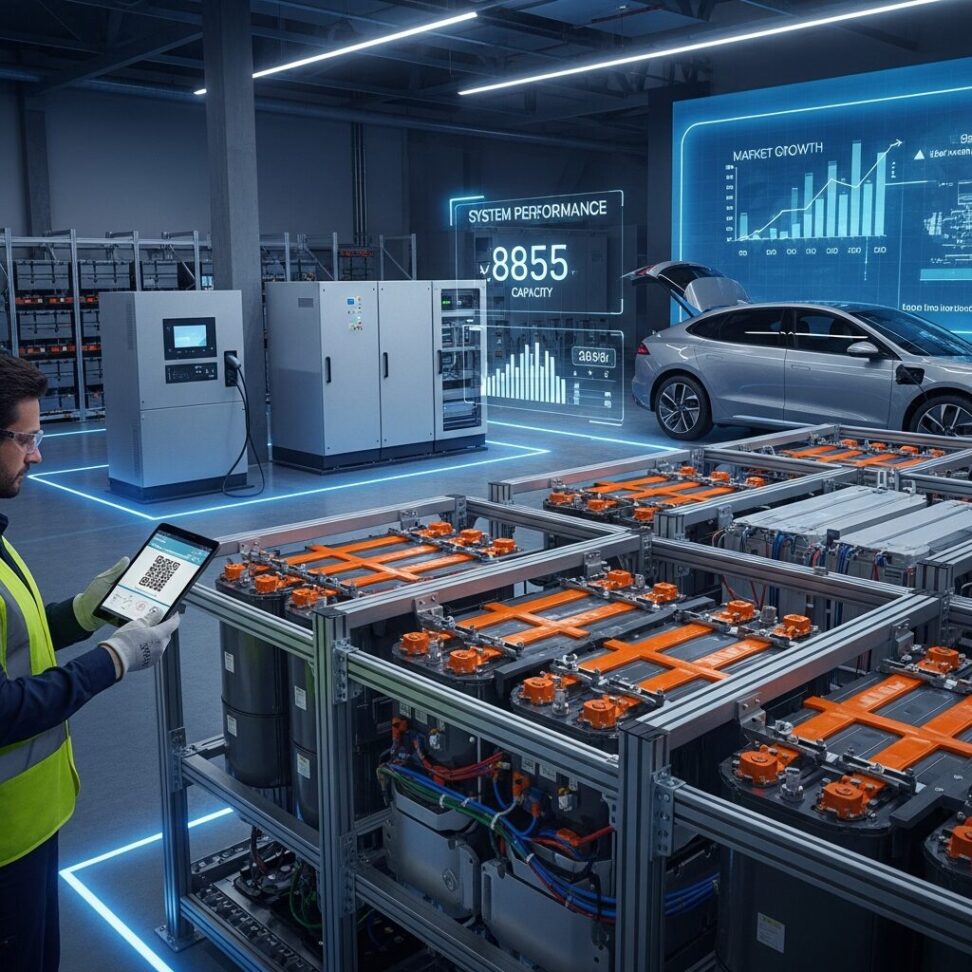
Second Life Automotive Battery Modules Transform Residential Energy Storage Solutions
The global market for second life automotive battery module systems is gaining significant traction as electric vehicle adoption accelerates and sustainability priorities reshape the energy storage industry. Repurposed EV batteries, which typically retain 70-80% of their original capacity after automotive use, are finding new purpose in residential, commercial, and grid-scale energy storage applications.
Understanding Second Life Battery Technology
When electric vehicle batteries no longer meet the demanding performance requirements of automotive applications, they still hold considerable energy storage potential. Rather than heading directly to recycling facilities, these battery modules undergo testing, refurbishment, and reconfiguration to serve less intensive applications. This approach extends battery lifespan by an additional 7 to 10 years while reducing waste and lowering the cost of energy storage systems.
Residential Energy Storage Applications
Homeowners are increasingly turning to second life battery systems as a cost-effective alternative to new lithium-ion storage products. These repurposed systems typically cost 30-70% less than new battery storage solutions, making solar-plus-storage installations more accessible for average households.
Key benefits driving residential adoption include:
- Lower upfront investment compared to new battery systems
- Backup power capabilities during grid outages
- Better integration with rooftop solar installations
- Reduced environmental impact through battery reuse
- Time-of-use energy arbitrage opportunities
Market Growth Drivers
Several factors are propelling the second life battery module market forward. The rapid expansion of the electric vehicle industry is creating a substantial supply of retired batteries, with projections indicating millions of EV battery packs will reach end-of-vehicle-life over the next decade. Simultaneously, growing demand for renewable energy integration and grid stabilization is creating strong demand for affordable storage solutions.
Government incentives and regulatory frameworks supporting circular economy principles are also encouraging manufacturers and utilities to invest in battery repurposing infrastructure. European nations, along with the United States, China, and Japan, have implemented policies that promote battery reuse before recycling.
Key Industry Players
Several companies are shaping this developing market. Nissan, through its partnership with 4R Energy, has been a pioneer in reusing Leaf batteries for stationary storage applications. Renault has established second life programs using batteries from its ZOE electric vehicles for grid support and residential storage projects across Europe.
BMW has collaborated with utilities to deploy second life battery storage systems, while Tesla continues to explore repurposing pathways for its automotive batteries. Startups such as B2U Storage Solutions, Connected Energy, and RePurpose Energy are also making significant contributions by developing specialized platforms for aggregating and deploying repurposed EV batteries at scale.
Commercial and Grid-Scale Applications
Beyond residential use, second life battery systems are being deployed for commercial buildings, EV charging station buffering, and utility-scale grid support. These applications benefit from the lower cost per kilowatt-hour of repurposed batteries while providing valuable services such as peak