
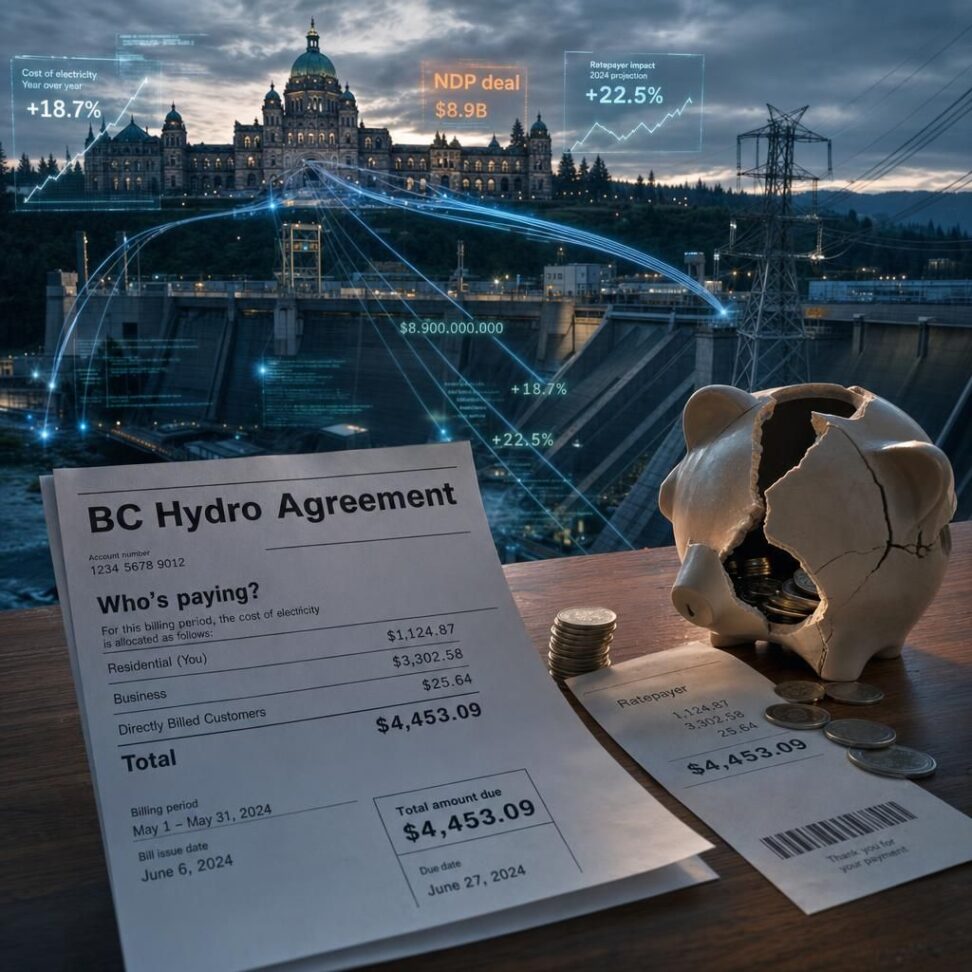
BC Hydro NDP Deal Funding Mystery Unclear to British Columbians
Questions Mount Over Undisclosed Energy Deal Costs
British Columbians are being kept in the dark about who will ultimately foot the bill for the NDP government’s recent BC Hydro deal, according to concerns raised by the BC Conservatives. The lack of transparency surrounding the agreement has sparked broader questions about accountability in the province’s energy policy and the potential impact on ratepayers already grappling with rising costs of living.
The Core of the Controversy
At issue is the NDP government’s agreement involving BC Hydro, the province’s public electric utility. While the deal has been announced, key financial details—specifically who is responsible for covering the associated costs—remain unclear to the public. Critics argue that residents deserve straightforward answers about whether the burden will fall on taxpayers, hydro customers, or another party entirely.
The BC Conservatives have been vocal in demanding clarity, arguing that the absence of financial disclosure undermines public trust and raises legitimate concerns about the long-term implications for household energy bills across British Columbia.
Why Transparency Matters for Ratepayers
BC Hydro serves the vast majority of British Columbia’s population and businesses, making any major deal involving the utility a matter of public interest. When financial terms are left ambiguous, ratepayers face uncertainty about future electricity rates, potential surcharges, or hidden costs that could emerge over time.
Concerns being raised include:
- Whether hydro rates will increase to cover deal-related expenses
- If taxpayer dollars are being used to subsidize the agreement
- The long-term financial obligations tied to the arrangement
- Whether the deal aligns with the province’s broader clean energy goals
About BC Hydro
BC Hydro is a Crown corporation owned by the Government of British Columbia. Established in 1961, it is one of the largest electric utilities in Canada, serving approximately 4 million customers across the province. The utility generates most of its electricity from hydroelectric sources, making it a cornerstone of British Columbia’s renewable energy portfolio. As a public utility, BC Hydro’s operations, rates, and financial decisions have direct implications for millions of residents and businesses.
The Political Dimension
The BC Conservatives have positioned themselves as advocates for greater fiscal accountability, calling on the NDP government to release full details of the deal. The opposition argues that British Columbians have a right to know precisely how public money and utility resources are being managed, particularly during a period when affordability remains a top concern for households.
Energy policy has become an increasingly contentious issue in British Columbia, with debates over new projects, rate hikes, and long-term supply agreements shaping the political landscape. The current controversy adds another layer to ongoing discussions about how the province should balance clean energy expansion with cost management.
Broader Implications for BC’s Energy Future
British Columbia has positioned itself as a leader in renewable energy, largely due to its abundant hydroelectric resources. However, growing electricity demand—driven by population growth, electrification of transportation, and industrial expansion including LNG projects—has placed increased pressure on the province’s energy infrastruct