
Michigan Appeals Court Upholds Renewable Energy Permitting Regulations
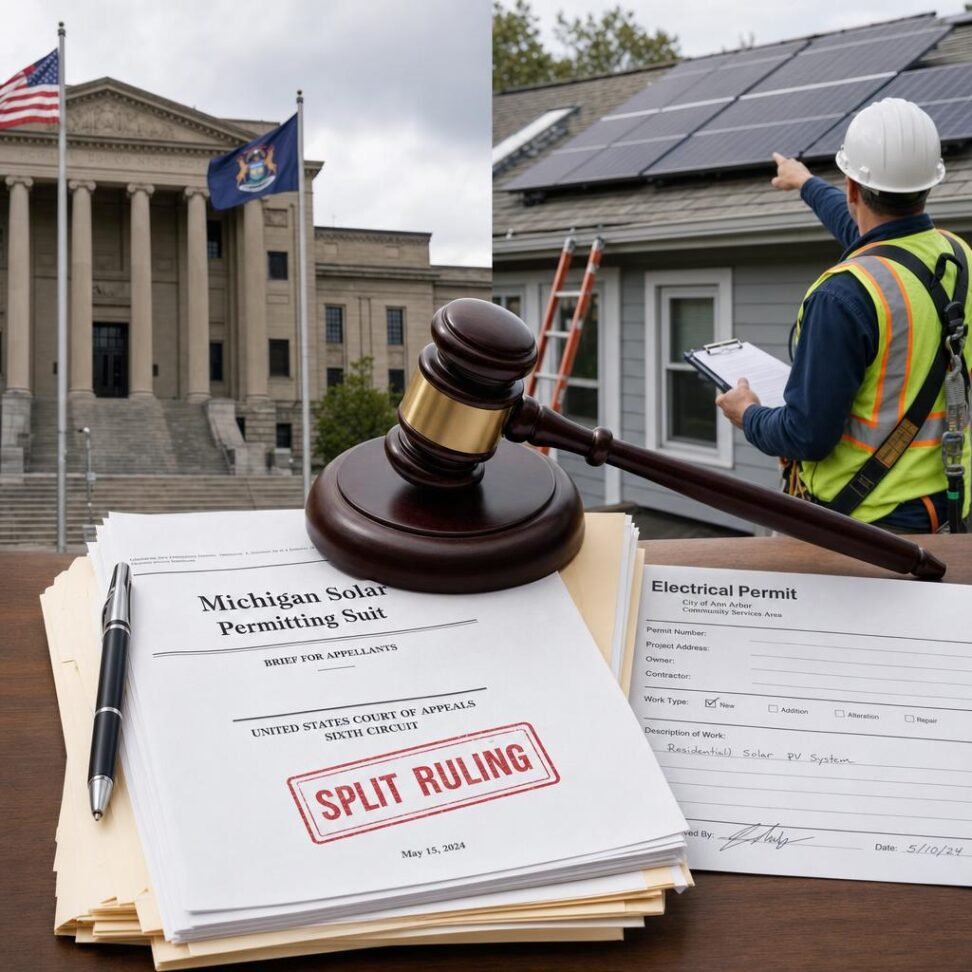
A Michigan appeals court has delivered a split decision regarding the state’s solar energy permitting framework, largely upholding regulations that govern how renewable energy projects receive approval. The ruling represents a significant development for the state’s clean energy sector and clarifies the authority of state agencies in managing large-scale solar installations.
The case centered on challenges to Michigan’s permitting process for solar energy facilities. Local governments and property rights advocates had contested certain aspects of the state’s regulatory framework, arguing it infringed on local control and property owner rights. However, the court’s decision supports the state’s ability to establish unified standards for renewable energy project approvals.
Details of the Court Decision
The appeals court ruling addressed multiple aspects of Michigan’s renewable energy permitting system. While the decision was split on certain technical points, the overall outcome favored the existing regulatory structure. The court affirmed that state-level oversight of large renewable energy projects serves a legitimate public interest and does not improperly override local zoning authority.
This decision provides clarity for developers who have been navigating uncertain regulatory terrain. The ruling establishes that Michigan can maintain centralized permitting standards while still respecting local concerns and input during the approval process.
Implications for Solar Development in Michigan
The court’s decision has immediate consequences for renewable energy development across Michigan. Solar developers now have greater certainty about the permitting requirements they must meet when proposing new projects. This regulatory stability is essential for attracting investment and moving forward with planned installations.
Michigan has been working to expand its renewable energy capacity as part of broader climate and energy goals. The state aims to increase clean energy generation while balancing environmental protection, economic development, and community concerns. A consistent permitting framework helps facilitate this transition.
Balancing State and Local Authority
One of the key tensions in renewable energy development involves the appropriate division of authority between state and local governments. State agencies typically focus on broader energy policy goals, environmental standards, and grid integration. Local governments emphasize land use compatibility, visual impacts, and community character.
The Michigan appeals court ruling navigates this balance by upholding state permitting authority while acknowledging the role of local input. This approach allows for comprehensive environmental and technical review at the state level while preserving opportunities for community participation in the siting process.
Industry Response and Future Development
The renewable energy industry has generally welcomed the decision as providing necessary regulatory consistency. Solar developers have emphasized that clear, predictable permitting processes are essential for project planning and financing. Investors need confidence that approved projects can move forward without excessive delays or regulatory uncertainty.
Property owners and some local officials continue to express concerns about the siting of large solar facilities near residential areas or agricultural land. These stakeholders argue for stronger local control over where renewable energy projects can be located and what design standards they must meet.
Michigan’s Renewable Energy Goals
Michigan has established targets for increasing renewable energy generation as part of its energy portfolio. The state recognizes that achieving these goals requires both new solar installations and continued development of wind energy resources. Streamlined permitting processes support these objectives by reducing barriers to project development.
The appeals court decision removes a significant source of uncertainty that had complicated planning for new renewable energy facilities. Developers can now proceed with greater confidence that approved projects will withstand legal challenges based on permitting authority.
Looking Ahead
While this appeals court ruling resolves important questions about Michigan’s renewable energy permitting system, ongoing discussions continue about how best to site clean energy projects. State officials, local governments, developers, and community members must work together to ensure that renewable energy expansion occurs in ways that respect local concerns while meeting state energy objectives.
The decision sets a precedent that may influence how other states structure their renewable energy regulatory frameworks. As more states pursue ambitious clean energy goals, the balance between state authority and local control will remain a critical issue in energy policy development.
Michigan’s experience demonstrates that clear legal frameworks for renewable energy permitting benefit all stakeholders by reducing uncertainty and establishing predictable processes for evaluating proposed projects.
Analyzed and outlined by Claude Sonnet 4.5, images by GPT-Image-2_4-21-26.
**Source**
https://www.thestar.com/news/world/united-states/appeals-court-issues-split-ruling-in-michigan-solar-permitting-suit/article_6a408dc1-ceb1-5efa-99e9-9ab233c21f77.html