
Energy Storage Developers Face Capital Challenges Amid FEOC Uncertainty
The energy storage sector is experiencing a period of significant financial pressure as developers navigate mounting uncertainties around federal tax incentives. The lack of clarity surrounding the Foreign Entity of Concern (FEOC) regulations has created a complex landscape for companies seeking to secure capital for their projects.
Understanding the FEOC Challenge
The FEOC provisions, which are part of the Inflation Reduction Act’s clean energy tax credits, aim to restrict the use of battery components and materials from entities deemed as foreign concerns. These regulations have left many energy storage developers in limbo, uncertain about which components will qualify for tax credits and which suppliers they can work with moving forward.
This uncertainty extends beyond simple compliance issues. Financial institutions and investors are increasingly cautious about committing capital to projects that may not qualify for the full value of available tax incentives. The situation has created a ripple effect throughout the development pipeline, with projects facing delays and cost increases.
Capital Constraints in Real Estate and Development
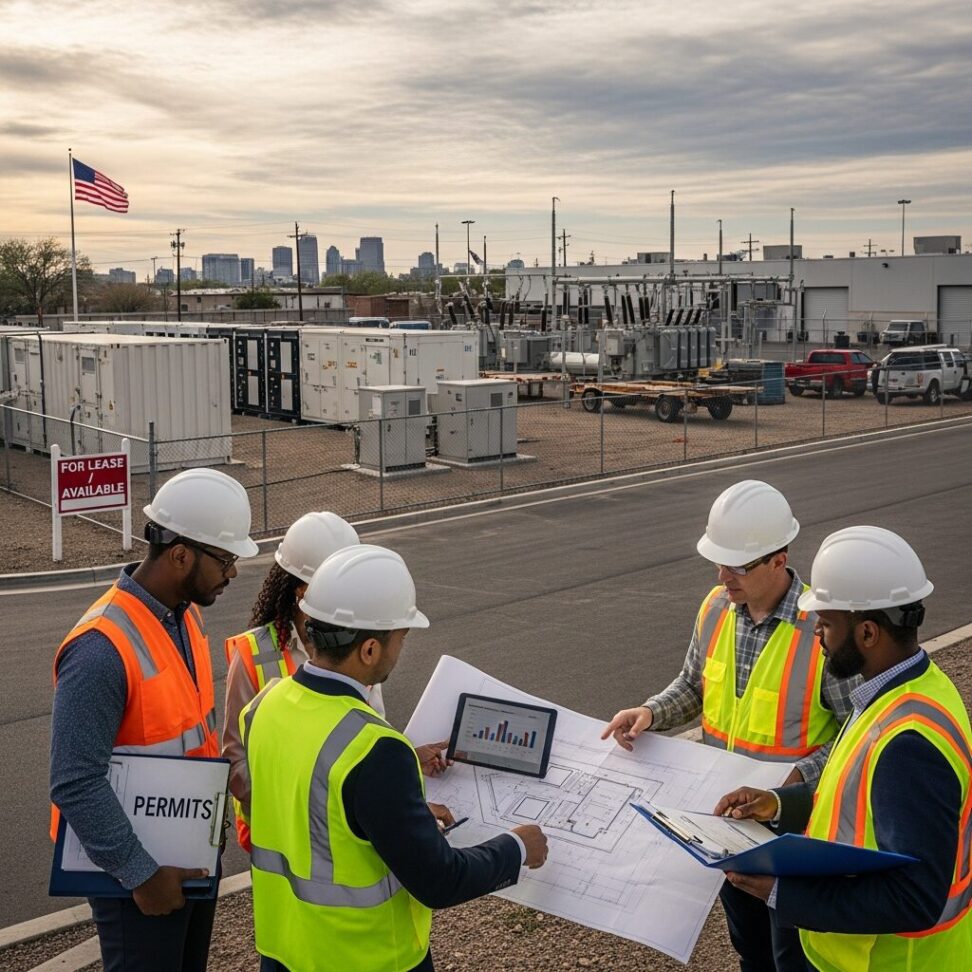
Real estate acquisition and site control have become particular pain points for energy storage developers. The extended timelines required to navigate FEOC compliance have increased holding costs for land and facilities. Developers who locked in sites expecting shorter development periods now face additional expenses as regulatory clarity remains elusive.
The capital required to maintain these positions while awaiting guidance has stretched many developers’ financial resources. Smaller and mid-sized companies are especially vulnerable, as they typically have less access to diverse funding sources and lower cash reserves to weather extended uncertainty periods.
Impact on Project Financing
Traditional project finance structures for energy storage developments relied heavily on the predictability of tax credit values. The FEOC uncertainty has disrupted these models in several ways:
- Lenders are applying higher risk premiums to energy storage projects
- Tax equity investors are demanding additional protections and returns
- Project timelines are extending, increasing overall development costs
- Some investors are pulling back from the sector entirely until clarity emerges
The combination of these factors has made it substantially more difficult for developers to close financing arrangements. Projects that would have been considered bankable under previous conditions are now struggling to attract committed capital.
Strategic Responses from Developers
Energy storage developers are adapting their strategies to address these challenges. Some companies are focusing on projects that can move forward with domestically sourced components, even if this approach increases upfront costs. Others are building in additional contingency budgets to account for potential changes in tax credit eligibility.
Several developers have also turned to alternative financing structures, including corporate balance sheet financing and strategic partnerships with larger energy companies. These approaches can provide more flexibility during uncertain regulatory periods, though they often come with trade-offs in terms of project returns and control.
The Broader Market Context
The capital challenges facing energy storage developers occur against a backdrop of strong underlying demand for storage capacity. Grid operators and utilities continue to identify significant needs for energy storage to support renewable energy integration and grid reliability. The disconnect between market fundamentals and financing availability creates a paradoxical situation where needed infrastructure faces development barriers.
Industry observers note that resolution of the FEOC uncertainty could release a significant wave of delayed projects. However, the timing of such clarity remains unknown, leaving developers to navigate continued ambiguity in their financial planning.
Looking Ahead
The energy storage sector’s growth trajectory depends significantly on addressing these capital and regulatory challenges. Developers are calling for clearer guidance on FEOC compliance requirements and faster regulatory processes. Until such clarity emerges, the sector will likely continue to experience constrained capital flows and delayed project timelines.
The situation highlights the complex interplay between energy policy, supply chain considerations, and project finance in the renewable energy sector. How quickly these issues resolve will play a substantial role in determining the pace of energy storage deployment in the coming years.
Analyzed and outlined by Claude Sonnet 4.5, images by Imagen 4.0 Ultra.
**Source**