
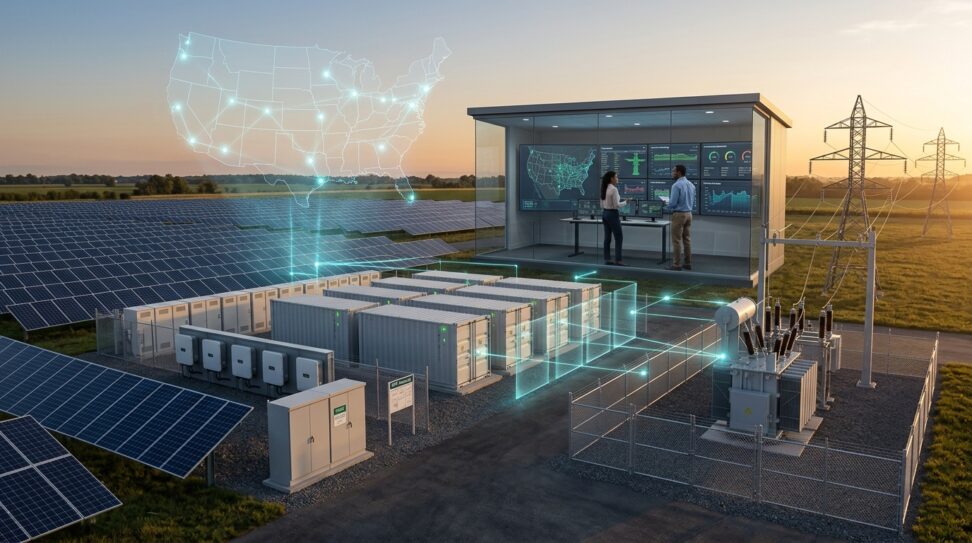
Protecting America’s Grid: Solar Storage Solutions for Bulk Power Security
The United States power grid faces a growing set of security challenges as more solar and storage assets connect to the bulk power system. With clean energy deployment accelerating nationwide, utilities, developers, and federal regulators are working to ensure that this expanding infrastructure remains resilient against cyber threats, equipment vulnerabilities, and supply chain risks.
The Bulk Power System and Its Growing Solar Footprint
The bulk power system (BPS) refers to the large-scale generation and transmission network that keeps electricity flowing across regions and states. Historically dominated by coal, natural gas, and nuclear plants, this system is now incorporating record levels of solar generation paired with battery energy storage.
As these renewable assets scale up, they introduce new components, software systems, and communication pathways into a grid that was originally built around centralized, analog generation sources. This shift requires updated approaches to reliability and security planning.
Why Security Matters for Solar and Storage Assets
Solar and storage systems rely heavily on digital controls, remote monitoring platforms, and networked inverters. While this connectivity improves efficiency and allows operators to manage output in real time, it also creates potential entry points for cyber intrusions if not properly secured.
Key areas of concern include:
- Inverter firmware and software vulnerabilities
- Remote access points used for monitoring and control
- Supply chain risks tied to imported components
- Data integrity across communication networks linking distributed assets
Federal regulators, including the North American Electric Reliability Corporation (NERC), have increased scrutiny of how solar and storage projects are integrated into the grid, particularly as these assets grow to represent a larger share of total generating capacity.
Regulatory Oversight and Compliance Requirements
NERC, a nonprofit organization responsible for developing and enforcing reliability standards across North America’s bulk power system, plays a central role in shaping how solar and storage facilities must be designed and operated to meet security requirements. Projects that meet certain capacity thresholds are subject to Critical Infrastructure Protection (CIP) standards, which govern cybersecurity practices, access controls, and incident reporting.
Developers and asset owners must factor these compliance obligations into project planning from the earliest stages, since retrofitting security measures after construction can be costly and time-consuming. This has pushed many companies to prioritize security architecture during the design and procurement phases rather than treating it as an afterthought.
Industry Response: Building Security Into Project Design
Solar and storage developers are increasingly partnering with cybersecurity firms and equipment manufacturers that build compliance features directly into their products. This includes hardware with built-in encryption, secure remote access protocols, and monitoring systems designed to detect anomalies before they become larger problems.
Some of the practical steps being adopted across the industry include:
- Conducting third-party security audits before assets are connected to the grid
- Implementing network segmentation to isolate critical control systems
- Establishing incident response plans specific to renewable energy assets
- Vetting suppliers and components for cybersecurity risks tied to sourcing and manufacturing origin
These measures reflect a broader industry recognition that grid security is not solely the responsibility of transmission operators, but extends to every developer and equipment manufacturer contributing assets to the bulk power system.
Balancing Growth With Grid Reliability
The solar and storage sector continues to expand rapidly, driven by falling technology costs, state and federal incentives, and growing demand for clean, dispatchable power. However, this growth must be matched with equally robust attention to reliability and security standards to avoid introducing systemic risks into the grid.
Utilities and grid operators are working closely with developers to ensure that interconnection studies account for cybersecurity readiness alongside traditional technical requirements such as voltage regulation and frequency response. This collaborative approach aims to prevent security gaps from emerging as more distributed and utility-scale solar-plus-storage projects come online.
Looking Ahead
As the bulk power system continues to evolve, security considerations will remain a central factor in how solar and storage projects are planned, financed, and operated. Companies that proactively address cybersecurity and compliance requirements are likely to face fewer delays during interconnection and permitting processes, while also contributing to a more resilient national grid.
Industry stakeholders, from equipment manufacturers to utility-scale developers, are expected to continue refining best practices as regulatory frameworks adapt to the realities of a grid increasingly powered by distributed, digitally controlled renewable assets.
The path forward will require ongoing coordination between private developers, federal regulators, and grid operators to ensure that the expansion of solar and storage capacity strengthens, rather than compromises, the reliability of America’s bulk power system.
Analyzed and outlined by Claude Sonnet 5, images by Gemini 3.1 Flash.
**Source** https://www.renewableenergyworld.com/energy-business/energy-finance/securing-the-bulk-power-system-factor-this-brief/