
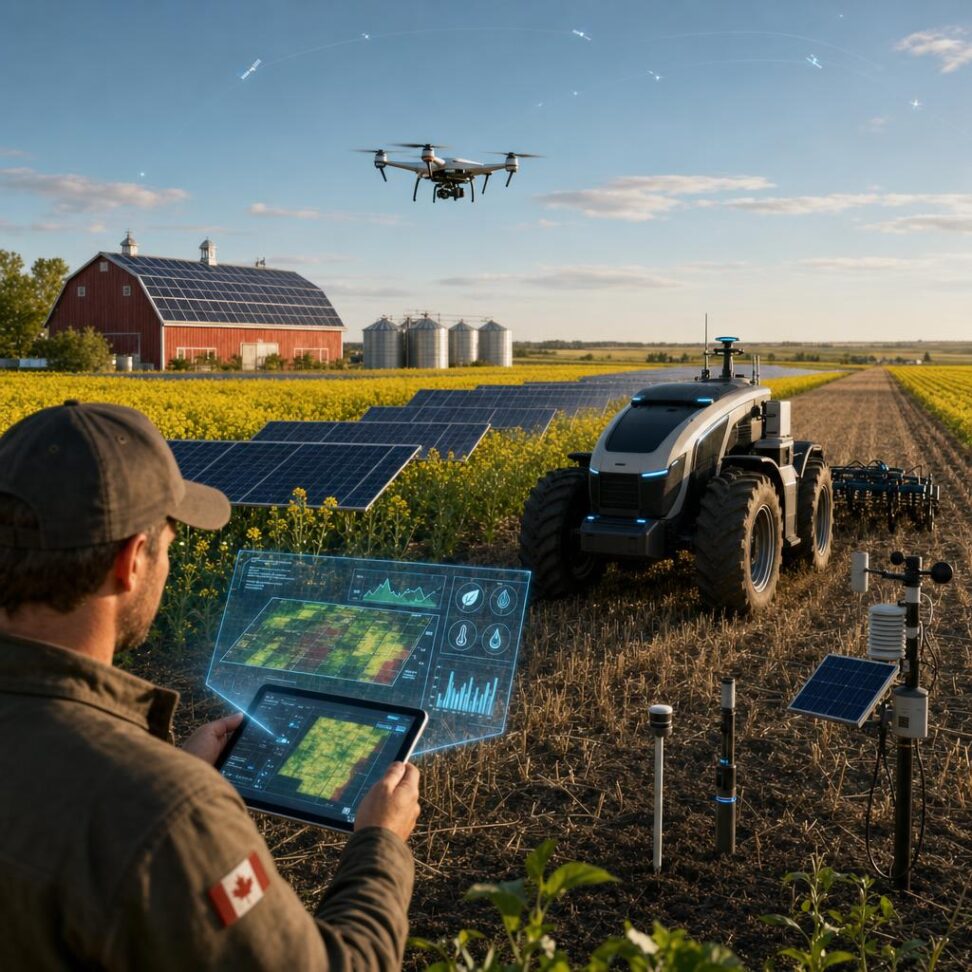
Agri-voltaics Revolution: How Solar Panels Transform Canadian Farm Energy Production
Canadian agriculture is experiencing a significant shift as farmers increasingly adopt agri-voltaic systems that combine crop production with solar energy generation. This dual-use approach allows agricultural land to serve two purposes simultaneously, addressing both food security and renewable energy needs.
Understanding Agri-voltaics
Agri-voltaics, also known as solar sharing, involves installing solar panels on farmland in a way that allows crops to continue growing beneath or between the panels. This innovative approach challenges the traditional notion that land must be dedicated to either agriculture or energy production. The elevated solar panel structures create a unique microclimate that can actually benefit certain crops by providing partial shade and reducing water evaporation.
Benefits for Canadian Farmers
The integration of solar panels into farming operations offers multiple advantages for Canadian agricultural producers:
- Additional revenue stream from electricity generation while maintaining crop production
- Reduced energy costs for farm operations including irrigation, cooling, and equipment
- Protection for crops from extreme weather conditions including hail and excessive sun exposure
- Improved water efficiency through reduced evaporation rates
- Enhanced land productivity by generating both food and energy from the same acreage
Precision Technology Integration
Modern agri-voltaic installations increasingly incorporate precision agriculture technologies. Sensors and monitoring systems track soil moisture, temperature, and light levels to optimize both crop growth and energy production. This data-driven approach allows farmers to make informed decisions about irrigation timing, crop selection, and panel positioning.
The combination of solar infrastructure with precision farming tools creates opportunities for automation and improved resource management. Farmers can remotely monitor their operations and adjust systems based on real-time environmental conditions.
Suitable Crops and Applications
Research indicates that certain crops perform particularly well under solar panel arrays. Shade-tolerant plants such as leafy greens, berries, and some vegetables can thrive in the modified light conditions created by overhead panels. Livestock operations also benefit from agri-voltaic installations, as animals can graze beneath panels while enjoying protection from harsh weather.
Canadian farmers are experimenting with various crops to determine which varieties produce optimal yields under partial shade conditions. This ongoing research helps refine best practices for different regional climates and soil types across the country.
Implementation Challenges
Despite the potential benefits, farmers face several obstacles when considering agri-voltaic systems:
- High upfront installation costs for solar panel infrastructure
- Need for specialized equipment that can operate around panel structures
- Regulatory and zoning requirements that vary by province and municipality
- Limited long-term data on crop yields under Canadian climate conditions
- Grid connection requirements and electricity buyback agreements
Economic Considerations
The financial viability of agri-voltaic projects depends on various factors including electricity rates, available subsidies, and crop selection. While initial investments can be substantial, many farmers report that energy sales and reduced operating costs provide acceptable return periods.
Provincial and federal incentive programs help offset installation costs, making these systems more accessible to agricultural operations of different sizes. As solar technology costs continue to decline, agri-voltaics becomes increasingly economically attractive.
Environmental Impact
Beyond economic benefits, agri-voltaic systems contribute to environmental sustainability. By generating clean energy on existing agricultural land, these installations reduce the need for separate solar farms that consume additional acreage. The dual-use approach maximizes land efficiency while decreasing greenhouse gas emissions associated with conventional energy sources.
The shade provided by panels can reduce heat stress on crops during extreme summer temperatures, potentially becoming more valuable as climate patterns shift. Water conservation through reduced evaporation also supports sustainable farming practices in regions facing drought conditions.
Future Outlook
As more Canadian farmers adopt agri-voltaic systems, the agricultural sector moves toward greater energy independence and sustainability. Continued research into crop performance, panel design optimization, and integration with smart farming technologies will further refine these systems.
The growing interest in agri-voltaics reflects broader trends toward multifunctional land use and renewable energy adoption. Canadian farms are positioning themselves at the forefront of this agricultural transformation, demonstrating that food production and clean energy generation can coexist successfully.
Analyzed and outlined by Claude Sonnet 4.5, images by GPT-Image-2_4-21-26.
**Source** https://www.msn.com/en-ca/news/other/canadian-farms-merge-solar-power-with-precision-technology/ss-AA23ULU6