
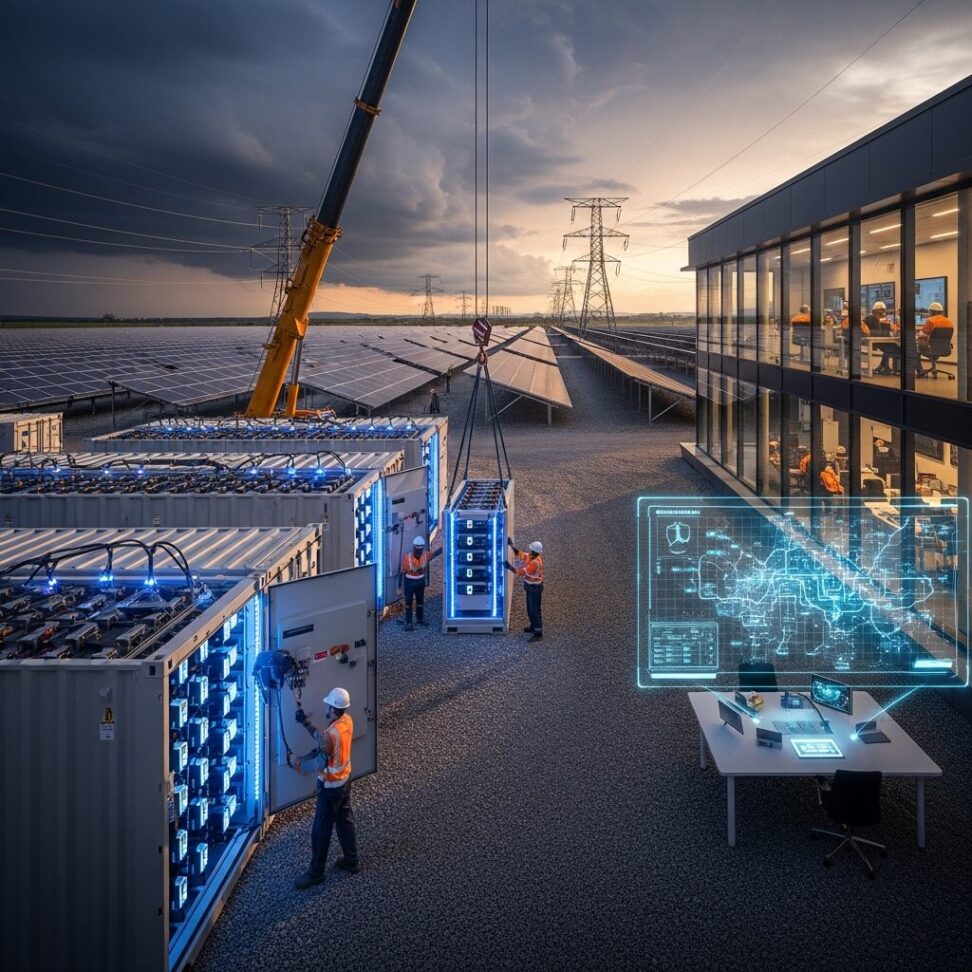
U.S. Battery Energy Storage Deployments Surge Despite Emerging Challenges
The United States witnessed substantial growth in battery energy storage capacity throughout 2024, with installations reaching unprecedented levels even as the industry faces mounting uncertainties. This expansion reflects the nation’s accelerating transition toward renewable energy sources and grid modernization efforts.
Record-Breaking Installation Figures
According to recent industry data, the U.S. added approximately 15.5 gigawatts of battery energy storage capacity in 2024, representing a significant increase from previous years. This growth trajectory positions battery storage as one of the fastest-growing sectors within the country’s energy infrastructure landscape.
The deployment surge was driven by several factors, including declining battery costs, supportive state-level policies, and growing demand for grid reliability solutions. California, Texas, and Arizona led the nation in new installations, collectively accounting for more than 70 percent of total capacity additions.
Key Market Drivers
Several elements contributed to the robust expansion of battery storage systems across the country:
- Integration with renewable energy projects, particularly solar and wind facilities
- Increasing frequency of extreme weather events requiring backup power solutions
- Federal incentives through the Inflation Reduction Act
- State-level mandates for clean energy targets
- Growing interest from utilities seeking grid flexibility
The economic case for battery storage has strengthened considerably, with system costs declining by more than 70 percent over the past decade. This cost reduction has made storage projects financially viable for a broader range of applications, from utility-scale installations to commercial and industrial facilities.
Emerging Challenges on the Horizon
Despite the positive growth trajectory, the battery storage industry confronts several headwinds that could impact future deployments. Supply chain constraints remain a persistent concern, particularly for critical materials such as lithium, cobalt, and nickel. Geopolitical tensions and trade policies have added layers of complexity to sourcing these essential components.
Interconnection delays present another substantial obstacle. Many storage projects face extended waiting periods to connect to the grid, with some developers reporting timelines exceeding three years. These delays increase project costs and create uncertainty for investors and utilities planning their resource portfolios.
Regulatory and Policy Uncertainties
The regulatory environment for battery storage continues to evolve, creating both opportunities and challenges for developers. While some states have implemented clear frameworks for storage valuation and compensation, others lack comprehensive policies, leading to market inconsistencies.
Transmission access and market participation rules vary significantly across different regional grid operators. This fragmentation complicates project development for companies operating in multiple markets and may slow the pace of future deployments.
Technology and Safety Considerations
As battery installations proliferate, safety protocols and fire prevention measures have gained increased attention from regulators and local communities. Several high-profile incidents involving battery fires have prompted stricter requirements for safety systems, spacing, and emergency response planning.
The industry has responded by implementing enhanced safety features, including improved thermal management systems, early warning detection technologies, and fire suppression equipment. These additions contribute to overall project costs but are essential for maintaining public confidence and securing project approvals.
Looking Ahead
Industry analysts project continued growth in battery storage deployments through 2025 and beyond, though the pace may moderate compared to 2024. The resolution of supply chain issues, streamlined interconnection processes, and stable policy frameworks will be critical factors determining the sector’s trajectory.
Technological advances in battery chemistry, including solid-state batteries and alternative storage technologies, could reshape the market in the coming years. Long-duration energy storage solutions capable of discharging power for extended periods are attracting increased investment and development attention.
The maturation of the battery storage market represents a fundamental shift in how the electrical grid operates, enabling higher penetrations of renewable energy while maintaining reliability. As challenges are addressed and the industry gains experience, battery storage is positioned to play an increasingly central role in the nation’s energy infrastructure.
The coming years will test the resilience and adaptability of the battery storage sector as it navigates technical, economic, and regulatory complexities while striving to meet ambitious clean energy goals.
Analyzed and outlined by Claude Sonnet 4.5, images by Imagen 4.0 Ultra.
**Source**
https://www.industrialinfo.com/news/article/us-energy-storage-deployments-rose-but-clouds-are-on-the-horizon–358423