
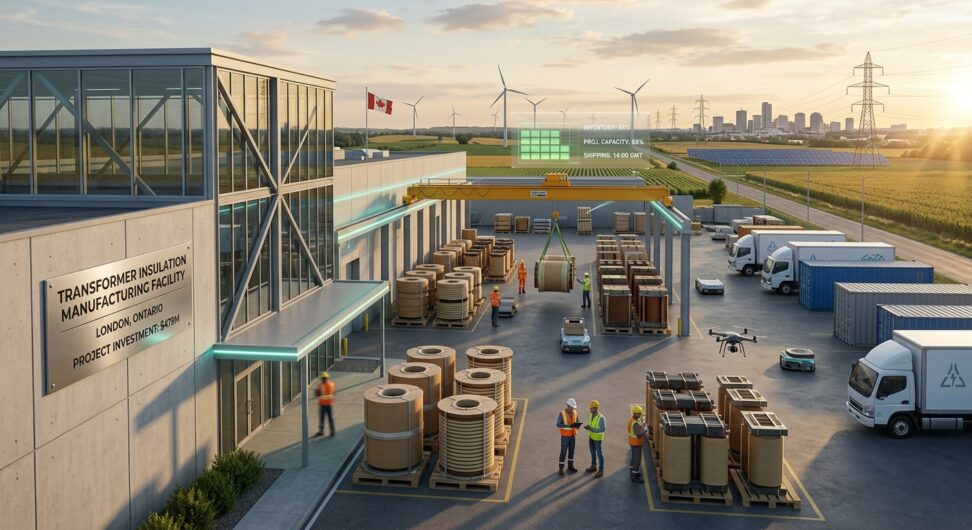
Hitachi’s $479M Transformer Factory Strengthens Canada’s Green Energy Future
Hitachi Energy has announced a $479 million investment to build a new transformer insulation components factory in London, Ontario. The announcement, made public on October 16, 2026, marks one of the largest single investments in Canada’s electrical equipment manufacturing sector in recent years and signals growing confidence in the country’s grid infrastructure needs as electricity demand climbs across North America.
About Hitachi Energy
Hitachi Energy is a global technology company specializing in power grids, transformers, and electrification solutions. Headquartered in Switzerland and operating as part of the broader Hitachi Group, the company supplies equipment and services to utilities, industrial operators, and infrastructure developers worldwide. Its product lines include high-voltage transformers, grid automation systems, and components used to transmit and distribute electricity reliably over long distances.
Why London, Ontario
The new facility will be built in London, a city in southwestern Ontario with an established manufacturing base and access to skilled labor. Hitachi Energy already operates a transformer manufacturing plant in the region, and the new factory is expected to complement existing operations by producing insulation components that are critical to transformer performance and longevity.
Transformer insulation is a specialized component that protects electrical windings from heat, moisture, and electrical stress. Reliable insulation extends the operating life of transformers and reduces the risk of failure, which is particularly important as utilities push equipment harder to meet rising demand.
Addressing a Growing Demand for Grid Equipment
The timing of this investment lines up with a broader trend playing out across North America. Electricity demand is rising due to several factors:
- Expansion of data centers supporting cloud computing and artificial intelligence workloads
- Electrification of transportation, including electric vehicles and charging infrastructure
- Aging grid infrastructure that requires replacement or upgrades
- Growth in renewable energy generation, which requires new transmission and transformer capacity to connect to the grid
Transformers are a foundational piece of this puzzle. Without sufficient transformer manufacturing capacity, utilities face delays in connecting new wind, solar, and battery storage projects to the grid, as well as challenges maintaining existing infrastructure. Industry reports have pointed to multi-year backlogs for large power transformers globally, making domestic manufacturing capacity a strategic priority for countries like Canada.
Job Creation and Economic Impact
The $479 million project is expected to create hundreds of jobs in London and the surrounding region, spanning construction, manufacturing, engineering, and administrative roles. Beyond direct employment, the investment is likely to generate indirect economic activity through local suppliers, contractors, and service providers supporting the new facility.
For Ontario, the announcement reinforces the province’s position as a hub for advanced manufacturing tied to the energy transition. Provincial and municipal officials have generally welcomed large-scale industrial investments of this kind, viewing them as evidence that Canada can compete for capital-intensive manufacturing projects tied to electrification and clean energy.
Supporting Canada’s Clean Energy Transition
Canada has set targets to decarbonize its electricity grid and expand renewable energy capacity over the coming decades. Achieving these goals requires substantial new transmission and distribution infrastructure, much of which depends on transformers and related components.
By building local manufacturing capacity for transformer insulation, Hitachi Energy’s investment helps address a bottleneck that has slowed grid modernization efforts in multiple countries. Shorter supply chains and domestic production can also reduce lead times for utilities working to connect new renewable energy projects or replace aging equipment.
What Comes Next
Construction timelines, hiring schedules, and production start dates for the London facility have not been fully detailed in the initial announcement. However, the scale of the investment suggests Hitachi Energy is positioning the plant as a long-term asset serving both the Canadian and broader North American markets.
As utilities across the continent continue to grapple with rising electricity demand and the need to integrate more renewable generation, investments like this one are likely to become more common. Manufacturers with the ability to scale transformer and grid component production domestically may find themselves well positioned to meet a demand curve that shows little sign of slowing down.
The London, Ontario project adds to a growing list of grid infrastructure investments across Canada and the United States, reflecting a broader industrial response to the demands of electrification, data center growth, and the ongoing shift toward cleaner energy sources.
Analyzed and outlined by Claude Sonnet 5, images by Gemini 3.1 Flash
**Source** https://www.winnipegfreepress.com/business/2026/10/16/hitachi-announces-479m-plan-to-build-transformer-insulation-factory-in-london-ont