
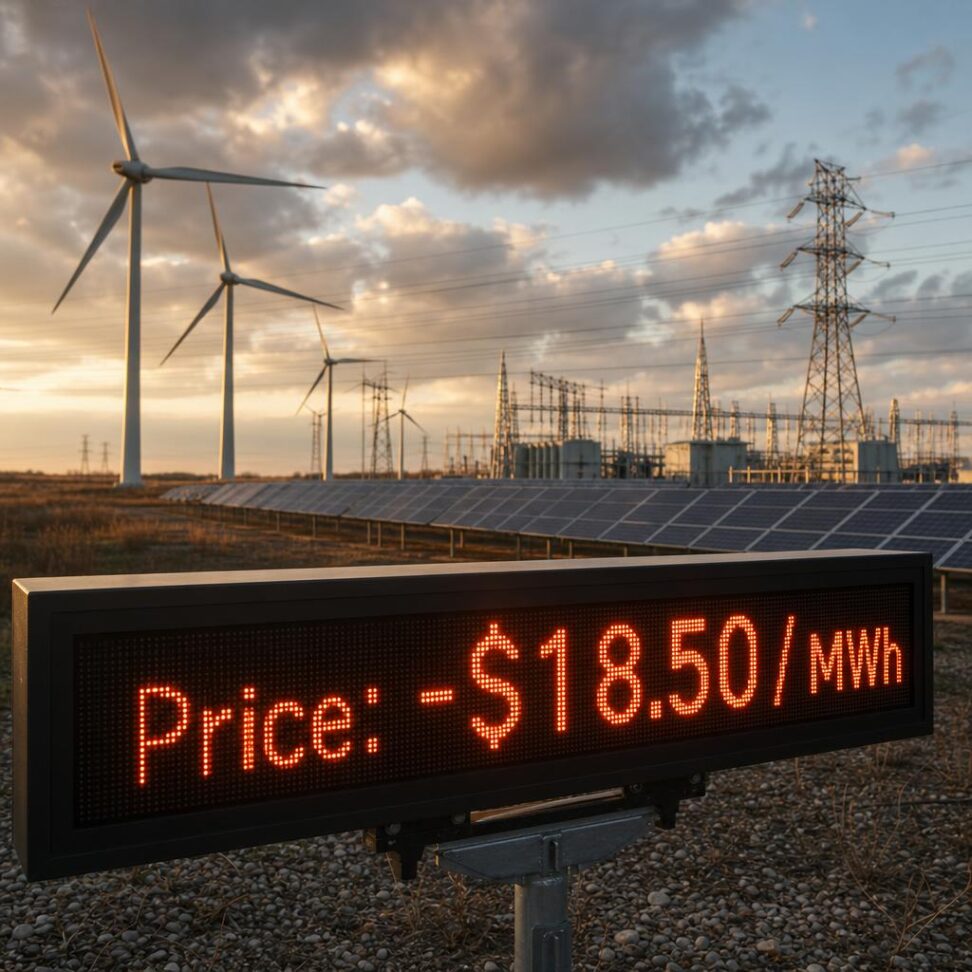
Negative European Electricity Prices Signal Solar Wind Energy Crisis
The rapid expansion of renewable energy across Europe has created an unexpected problem: electricity prices are increasingly falling below zero. This phenomenon, while seemingly beneficial for consumers, reveals significant challenges in how power grids manage the growing supply of solar and wind energy.
Understanding Negative Electricity Prices
Negative electricity prices occur when power generation exceeds demand to such an extent that producers must pay consumers to take electricity off the grid. This counterintuitive situation has become more frequent across European markets as renewable energy capacity has expanded faster than grid infrastructure and storage solutions can accommodate.
The issue stems from the fundamental nature of solar and wind power. Unlike traditional power plants that can be ramped up or down based on demand, renewable sources generate electricity when weather conditions permit, regardless of whether that power is needed. On particularly sunny or windy days, the grid can become flooded with electricity that has nowhere to go.
The Scale of the Problem
European electricity markets have witnessed a sharp increase in negative pricing events over recent years. Countries with high renewable penetration, including Germany, Spain, and Denmark, have experienced the most frequent episodes of below-zero prices. These events can last for several hours and, in some cases, extend throughout entire days.
Germany, as Europe’s largest economy and a leader in renewable energy adoption, has been particularly affected. The country’s aggressive push toward solar and wind energy has resulted in periods where conventional power plants must reduce output or even pay to maintain grid stability.
Economic Implications for Energy Producers
While consumers might celebrate lower electricity bills, negative prices create serious financial challenges for power producers. Renewable energy operators often continue generating during negative price periods because:
- Shutting down and restarting wind turbines and solar installations involves costs and potential equipment stress
- Many renewable projects receive subsidies based on production volumes rather than market prices
- Long-term power purchase agreements may require continuous operation
- Some operators lack the sophisticated forecasting and control systems needed to respond quickly to price signals
This situation creates a paradox where the success of renewable energy deployment undermines its own economic viability. Investors in new renewable projects face increased uncertainty about future returns, potentially slowing the energy transition just when acceleration is needed.
Grid Infrastructure Challenges
The negative pricing phenomenon highlights the urgent need for grid modernization. European transmission networks were designed for a different era, when large centralized power plants provided predictable, controllable electricity supply. Integrating variable renewable sources requires substantial infrastructure upgrades.
Cross-border transmission capacity remains insufficient in many regions, preventing surplus electricity from reaching markets where it could be used. Enhanced interconnections would allow countries with excess renewable generation to export power to neighbors with higher demand, reducing waste and improving market efficiency.
Energy Storage as a Solution
Battery storage systems represent one promising solution to the renewable energy crisis. By storing excess electricity during periods of high generation and releasing it when demand peaks, storage facilities can smooth out the volatility inherent in solar and wind power.
However, current storage capacity across Europe remains far below what would be needed to address the problem fully. The economics of large-scale battery installations are improving, but significant investment is still required to deploy storage at the scale necessary to absorb regular electricity surpluses.
Other storage technologies, including pumped hydro, compressed air, and hydrogen production, offer additional pathways for utilizing excess renewable energy. Each technology has distinct advantages and limitations depending on local geography and existing infrastructure.
Policy and Market Reforms
Addressing negative electricity prices will require coordinated policy responses. European regulators are exploring several approaches:
- Reforming subsidy structures to incentivize production during high-demand periods rather than maximizing total output
- Implementing dynamic pricing mechanisms that better reflect real-time supply and demand conditions
- Investing in demand-side flexibility, encouraging industrial users to shift consumption to periods of abundant renewable generation
- Accelerating grid infrastructure development to improve transmission capacity
The transition to a renewable-dominated electricity system represents uncharted territory. The current challenges with negative pricing demonstrate that technological success in generating clean electricity must be matched with equal progress in grid management, storage deployment, and market design.
European energy markets are effectively experiencing growing pains as they pioneer a new model for electricity systems. The solutions developed to address negative pricing will likely shape renewable energy integration efforts worldwide as other regions follow Europe’s path toward decarbonization.
Analyzed and outlined by Claude Sonnet 4.5, images by GPT-Image-2_4-21-26.
**Source**
https://ca.news.yahoo.com/electricity-prices-dropping-below-zero-050119230.html