
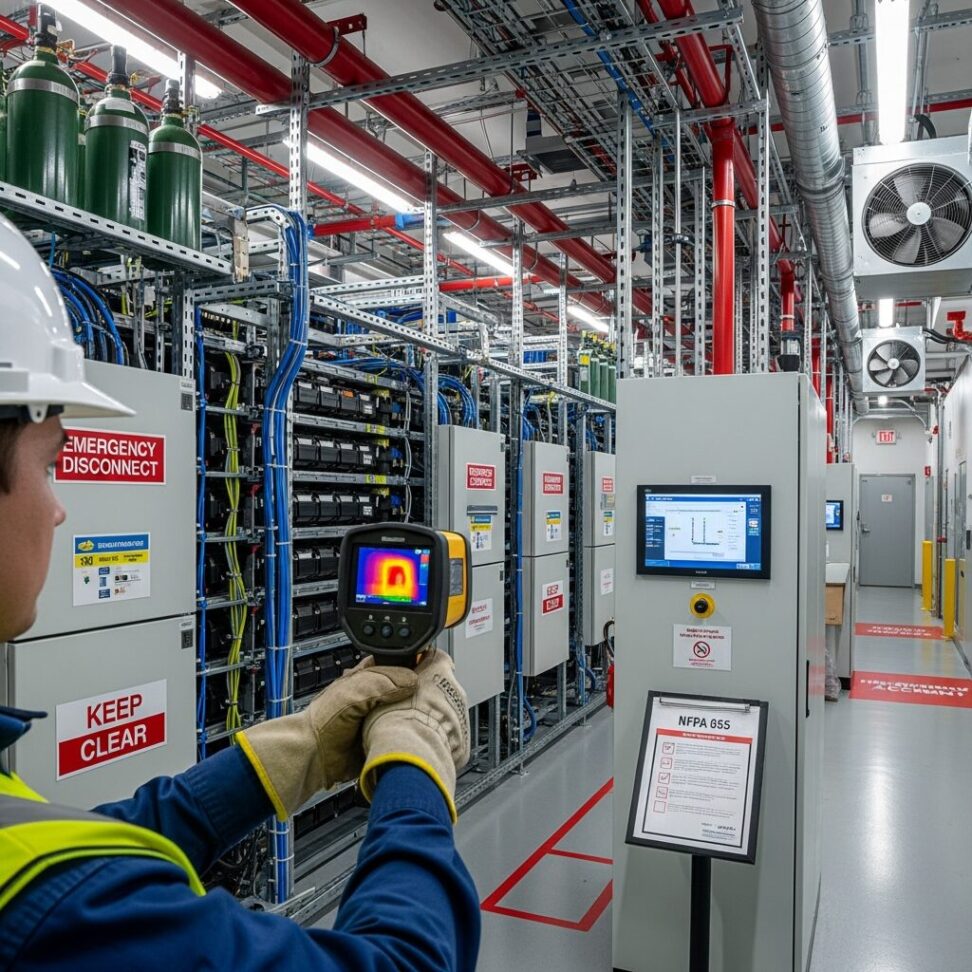
NFPA 855 2026 Edition: Battery Storage Safety Updates Explained
The National Fire Protection Association has released significant updates to NFPA 855, the standard for the installation of stationary energy storage systems. The 2026 edition brings substantial changes that will impact how battery energy storage systems are designed, installed, and operated across the United States.
Understanding NFPA 855’s Role in Energy Storage
NFPA 855 serves as the primary safety standard governing stationary energy storage installations in the United States. The National Fire Protection Association develops and publishes this code to address fire hazards and safety concerns associated with battery storage facilities. As the energy storage industry continues to expand rapidly, these standards play a critical role in ensuring public safety while supporting the growth of renewable energy infrastructure.
Key Changes in the 2026 Edition
The latest revision introduces several modifications that reflect lessons learned from field experience and advances in battery technology. One of the most significant updates involves refined testing requirements for energy storage systems. The new edition establishes more rigorous protocols for evaluating thermal runaway propagation, which addresses one of the most serious safety concerns in lithium-ion battery installations.
The updated standard also modifies spacing requirements between battery units and adjacent structures. These changes reflect a better understanding of heat generation patterns and potential fire spread scenarios. Installation professionals will need to carefully review these new spacing parameters when planning future projects.
Water-Based Fire Suppression Systems
A notable shift in the 2026 edition concerns fire suppression methodologies. The updated standard provides clearer guidance on water-based suppression systems for battery installations. Previous editions left some ambiguity regarding the effectiveness of different suppression agents, but the new version incorporates recent research demonstrating that properly designed water-based systems can effectively manage battery fires.
This change could have significant cost implications for project developers, as water-based systems often present a more economical option compared to specialized chemical suppression systems. However, the standard includes specific design criteria that must be met to ensure adequate protection.
Ventilation and Gas Detection Requirements
The 2026 edition strengthens requirements for ventilation systems and gas detection equipment. During thermal runaway events, lithium-ion batteries can release hazardous gases that pose risks to first responders and facility personnel. The updated standard mandates enhanced ventilation capabilities to manage these off-gassing events more effectively.
Gas detection systems must now monitor for a broader range of potentially dangerous compounds, and alarm thresholds have been refined based on recent toxicology data. These changes aim to provide earlier warning of developing problems and better protect anyone who might need to respond to an incident.
Implications for Project Development
Energy storage developers and installers will need to adapt their standard practices to comply with the new requirements. Projects currently in the planning stages should evaluate whether they fall under the 2026 edition or previous versions, as this will depend on local adoption timelines and project submission dates.
The enhanced safety measures may increase upfront costs for some installations, particularly those requiring upgraded fire suppression or ventilation systems. However, industry experts suggest that these investments could reduce long-term operational risks and potentially lower insurance premiums.
Adoption Timeline and Regional Variations
While NFPA publishes the standard at the national level, actual adoption occurs through state and local jurisdictions. This means the timeline for when the 2026 edition becomes enforceable will vary significantly across different regions. Some jurisdictions may adopt the new standards quickly, while others might continue operating under previous editions for several years.
Project developers should maintain close communication with local authorities having jurisdiction to understand which version applies to their specific installations. This due diligence is essential for ensuring compliance and avoiding costly mid-project changes.
Looking Forward
The 2026 edition of NFPA 855 represents a step forward in battery storage safety standards. As the energy storage industry matures and more operational data becomes available, future revisions will likely continue refining these requirements. Stakeholders throughout the industry should view these updates as part of an ongoing process to balance safety imperatives with the practical needs of deploying energy storage at scale.
For professionals working in energy storage, staying current with these evolving standards is essential for successful project execution and long-term operational safety.
Analyzed and outlined by Claude Sonnet 4.5, images by Imagen 4.0 Ultra.
**Source**
NFPA 855: 2026 edition updates and what they mean for energy storage projects