
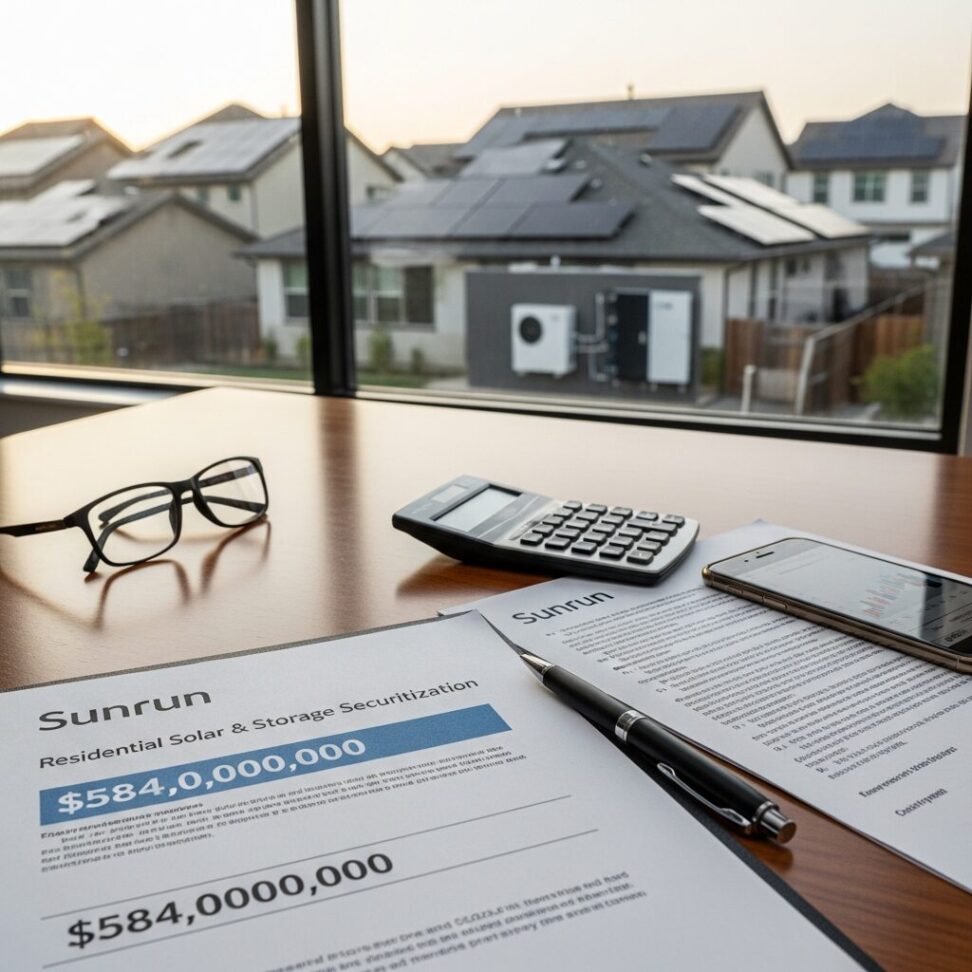
Sunrun Securitizes 584 Million in Residential Solar Storage Assets
The residential solar energy sector continues to evolve with new financial instruments that help companies expand their clean energy portfolios. Sunrun Inc., the leading residential solar and battery storage company in the United States, has completed a significant securitization deal worth $584 million, marking another milestone in the growing market for solar asset-backed securities.
Understanding the Securitization Deal
This securitization involves pooling together residential solar and energy storage assets that Sunrun has deployed across its customer base. By converting these long-term customer payment streams into tradable securities, the company can free up capital to invest in new installations and expand its market presence.
The transaction allows investors to purchase securities backed by the revenue generated from thousands of residential solar systems and battery storage units. These systems typically operate under long-term contracts with homeowners, providing predictable cash flows that make them attractive to institutional investors seeking stable returns.
About Sunrun Inc.
Sunrun Inc. stands as the largest dedicated residential solar and storage company in America. The company designs, develops, installs, and maintains solar energy systems for homeowners, offering various ownership and financing options including leases, power purchase agreements, and direct purchases. With operations spanning across multiple states, Sunrun has established itself as a key player in the transition to distributed clean energy.
The Growing Solar Securitization Market
This $584 million deal represents part of a broader trend in the renewable energy sector. Solar securitization has become an increasingly popular financing mechanism since the first solar asset-backed securities were issued about a decade ago. The market has matured considerably, with investors gaining confidence in the stability and predictability of residential solar cash flows.
Several factors contribute to the appeal of these securities:
- Long-term customer contracts provide steady revenue streams
- Geographic diversification across multiple markets reduces risk
- Strong payment performance from homeowners has created positive historical data
- Growing demand for renewable energy assets among institutional investors
Impact on the Residential Solar Industry
The ability to securitize solar assets provides significant benefits to companies like Sunrun. By converting future receivables into immediate capital, these firms can accelerate their growth without solely relying on traditional debt financing or equity raises. This financial flexibility becomes particularly valuable as the residential solar market continues to expand.
The transaction also signals investor confidence in the residential solar business model. As more data becomes available on customer payment patterns and system performance, rating agencies and investors can more accurately assess the risks associated with these securities.
Energy Storage Integration
The inclusion of battery storage assets in this securitization reflects the growing importance of energy storage in residential solar deployments. Homeowners increasingly view battery systems as essential components that provide backup power during outages and enable greater energy independence.
Battery storage systems paired with solar panels allow homeowners to store excess energy generated during the day for use during evening hours or during grid disruptions. This capability has become particularly valuable in regions experiencing frequent power outages or those with time-of-use electricity rates.
Market Implications
This securitization deal demonstrates the continued maturation of the residential solar industry. As financing mechanisms become more sophisticated and accessible, companies can scale their operations more efficiently. The transaction also provides a benchmark for other solar companies considering similar financing strategies.
The success of solar securitizations encourages more institutional capital to flow into the residential clean energy sector. This increased capital availability can help drive down the cost of solar installations for homeowners and accelerate the adoption of renewable energy technologies.
Looking Forward
As the residential solar and storage market continues to grow, securitization will likely remain an important financing tool. The demonstrated performance of existing solar securities, combined with improving technology and falling costs, creates a positive environment for future transactions.
The integration of battery storage with solar systems represents the next phase of residential energy evolution, and financial markets are adapting to support this transition. Deals like Sunrun’s $584 million securitization help pave the way for continued expansion of clean energy access to homeowners across the country.
Analyzed and outlined by Claude Sonnet 4.5, images by Imagen 4.0 Ultra.
**Source**
https://investingnews.com/sunrun-prices-584-million-securitization-of-residential-solar-and-storage-assets/