
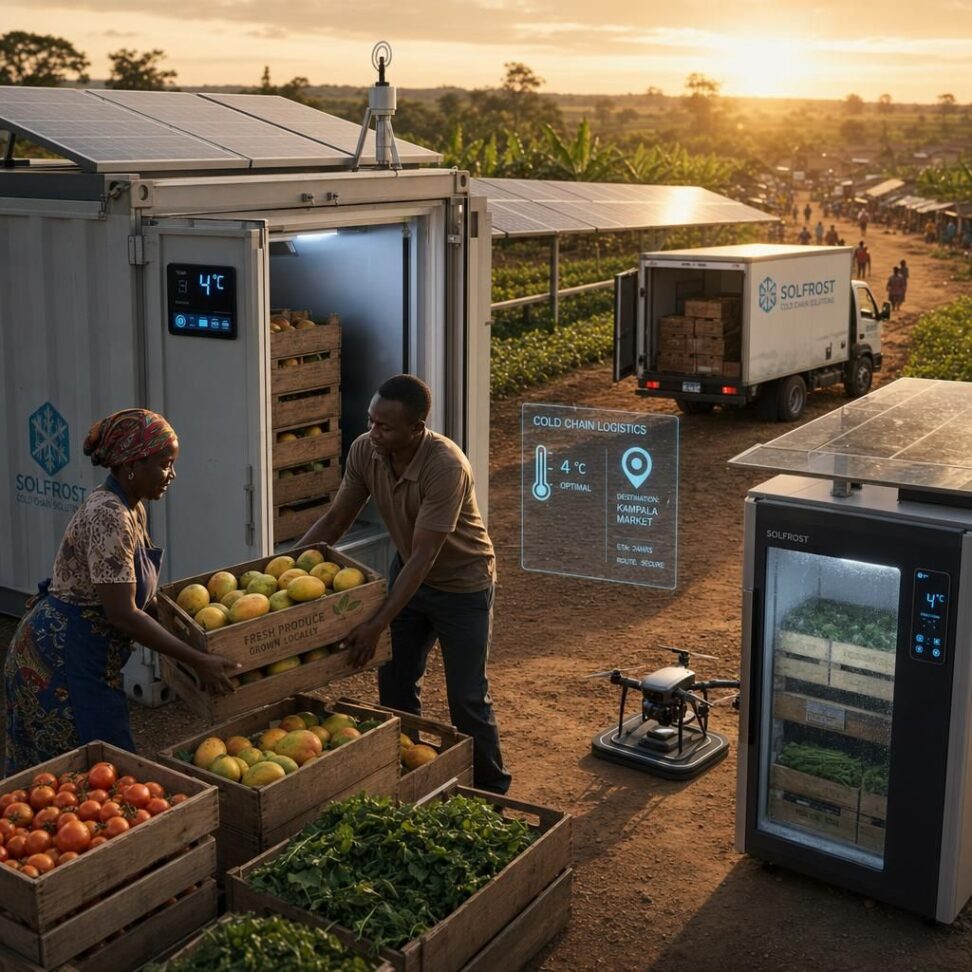
Solar-Powered Cold Storage Transforms African Farming and Market Access
African farmers are experiencing a significant shift in how they preserve and market their produce, thanks to the introduction of solar-powered cold storage facilities. This technology addresses one of the continent’s most persistent agricultural challenges: post-harvest losses that have historically prevented farmers from accessing lucrative markets.
The Scale of Food Loss in Africa
Post-harvest losses across Africa reach staggering proportions, with estimates suggesting that up to 40% of produce spoils before reaching consumers. This wastage occurs primarily due to inadequate storage infrastructure and unreliable electricity supplies in rural farming communities. The financial impact on smallholder farmers is substantial, limiting their income potential and contributing to food insecurity across the continent.
Solar Technology Provides a Solution
Solar-powered cold storage units are emerging as a practical answer to this challenge. These facilities operate independently of the electrical grid, making them ideal for remote agricultural regions where power infrastructure is unreliable or non-existent. The units maintain consistent temperatures that extend the shelf life of fruits, vegetables, and other perishable goods from days to weeks.
The technology works by converting solar energy into electricity that powers refrigeration systems. During daylight hours, solar panels generate power while simultaneously charging battery systems that keep the units running overnight and during cloudy periods.
Real-World Impact on Farming Communities
Farmers who have gained access to these facilities report substantial improvements in their operations. The extended storage capacity allows them to:
- Wait for better market prices instead of selling immediately after harvest
- Reduce produce waste significantly
- Access distant markets, including international buyers
- Negotiate from a stronger position with traders
- Smooth out income throughout the year rather than receiving payment only during harvest season
Opening International Markets
The ability to preserve produce for longer periods has opened doors to export opportunities that were previously unavailable to smallholder farmers. Fresh produce requires careful temperature control throughout the supply chain to meet international quality standards. Solar cold storage facilities provide the first critical link in this cold chain, enabling farmers to supply supermarkets and distributors in urban centers and overseas markets.
Economic Benefits Beyond Storage
The economic impact extends beyond individual farmers. Cold storage facilities often serve as community hubs where multiple farmers can store their produce. This collective approach reduces costs for individual farmers while creating local employment opportunities for facility operators and maintenance personnel.
Women farmers, who constitute a significant portion of Africa’s agricultural workforce, particularly benefit from this technology. The reduced physical demands of transporting produce immediately after harvest and the ability to plan market trips more strategically provide greater flexibility in managing both farm and household responsibilities.
Environmental Considerations
Solar-powered cold storage aligns with environmental sustainability goals. By reducing food waste, these facilities decrease the carbon footprint associated with agricultural production. Additionally, the use of renewable solar energy rather than diesel generators eliminates fuel costs and reduces greenhouse gas emissions.
Challenges and Expansion
Despite the clear benefits, widespread adoption faces obstacles. The initial capital investment required for solar cold storage units remains a barrier for many farming communities. However, various financing models are emerging, including cooperative ownership structures, pay-as-you-store arrangements, and partnerships with development organizations.
Maintenance and technical support also present challenges in remote locations. Training local technicians and establishing supply chains for replacement parts are essential components of successful implementation.
The Path Forward
As the technology becomes more affordable and financing mechanisms improve, solar-powered cold storage is expected to expand across African farming regions. Governments and development agencies are increasingly recognizing the technology’s potential to enhance food security, increase farmer incomes, and reduce overall food system losses.
The integration of cold storage facilities with other agricultural support services, such as market information systems and transportation networks, can multiply the benefits for farming communities. This holistic approach to post-harvest management represents a practical step toward modernizing African agriculture while maintaining its predominantly smallholder structure.
Solar-powered cold storage demonstrates how renewable energy technology can address specific development challenges in practical, economically viable ways. For African farmers, these facilities represent more than infrastructure—they are tools for economic empowerment and market participation.
Analyzed and outlined by Claude Sonnet 4.5, images by GPT-Image-2_4-21-26.
**Source**
https://www.thestar.com/news/world/africa/solar-cold-storage-helps-african-farmers-cut-losses-and-reach-global-markets/article_1ac8020a-aa8f-5618-a1bd-880e63c559b5.html